
How Mentors Can Speak Vision Over a Child’s Life
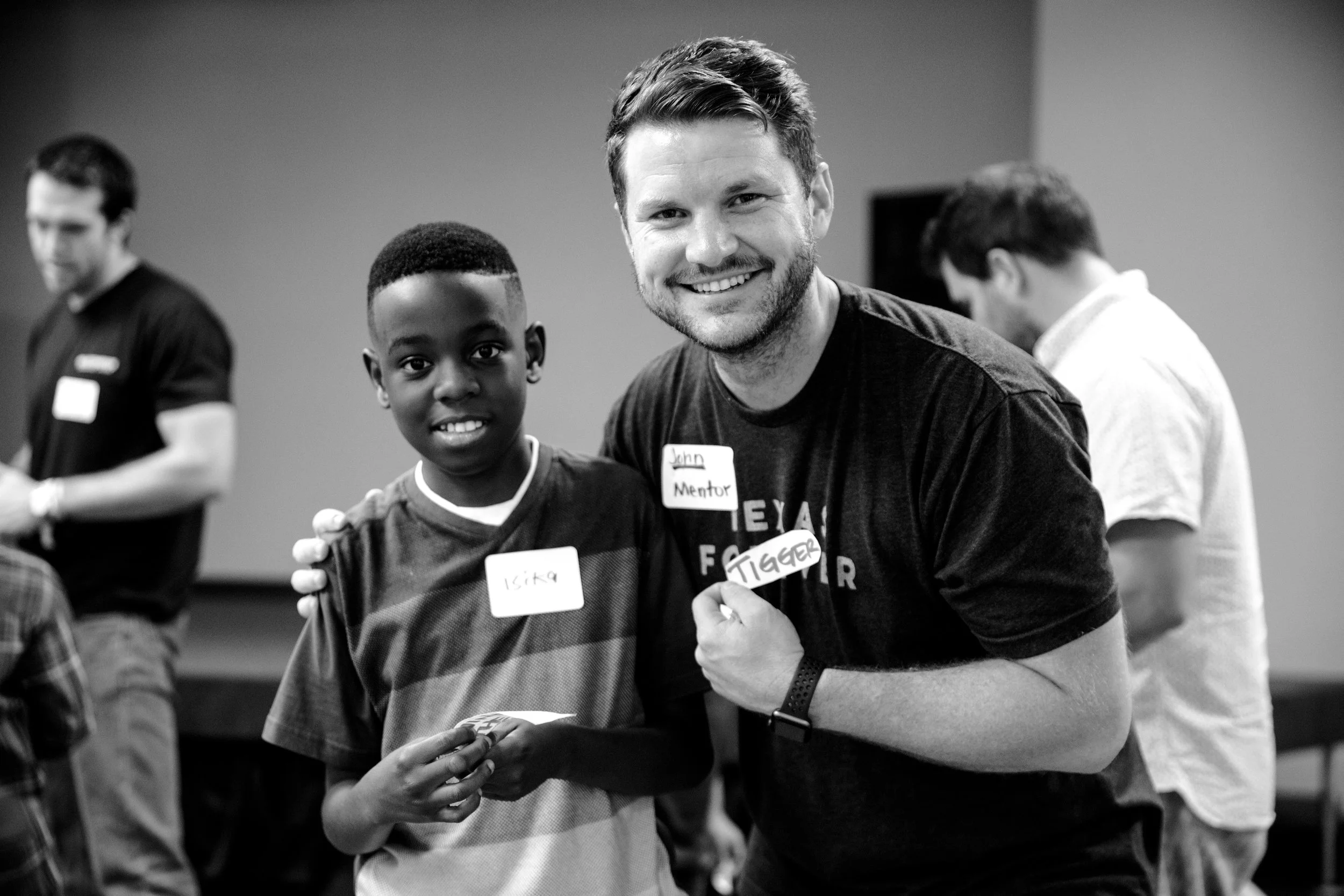
Josiah told me what he wanted to do with his life in a voice so quiet I almost missed it. We were sitting across from each other in a noisy restaurant after school, the kind of place where the ice machine hummed, conversations blended together, and nobody at the next table cared what we were talking about.
He kept looking down at his hands while he spoke. A napkin sat in front of him, and he was picking at the corner of it, tearing off tiny pieces and rolling them between his fingers like he needed something to do with all the nervousness in his body.
“I think I want to help kids one day,” he said.
I waited. I could tell there was more, but I also knew that if I jumped in too quickly, he might pull the words back.
Josiah swallowed, looked toward the window, and kept going. “Kids like me. Kids without dads. Kids who feel like they have to figure everything out on their own.”
Then he stopped and gave a small laugh, the kind people give when they are embarrassed by their own honesty. “I don’t even know if that makes sense.”
It made more sense than he knew.
I could feel how exposed he was in that moment. Josiah was not asking me for career advice. He was testing whether the dream inside of him was safe enough to say out loud. He was trying to find out if I would take him seriously, or if I would smile, nod, and move the conversation back to something easier.
I looked at him and said, “Josiah, I think that makes a lot of sense. And I think there may be something in you that God wants to use.”
He did not say much after that. He looked back down at the napkin, but he stopped tearing it.
That moment stayed with me because it reminded me that mentors are often present when a young person says something fragile for the first time. We can crush it, ignore it, rush it, or help them hold it with care.
Behavior Is Usually the Loudest Thing in the Room
Most of us notice behavior first. We notice the late arrival, the attitude, the missed assignment, the poor choice, the sarcastic answer, or the lack of follow-through.
That makes sense because behavior is visible. It interrupts plans, creates consequences, and gives us something specific to address.
But a young person often lives with a deeper question beneath the behavior. Who am I? Do I matter? Can my story become something good? Is there anything in me worth believing in?
Kids from hard places often carry names and labels they never asked for. They may have been called difficult, lazy, angry, dramatic, behind, too much, or trouble. Over time, those labels can start to feel like identity.
If I mentor only at the level of behavior, I may help a young person make a better choice for a day. If I speak to identity, I begin addressing the roots that shape many choices.
Josiah needed help with school, responsibility, and emotional control. He also needed someone to help him see that his pain did not cancel his purpose.
A Dream Can Sound Small at First
Vision rarely comes out polished. It often comes out in pieces, half sentences, nervous jokes, and ideas that sound uncertain even to the person saying them.
Josiah did not have a plan. He did not know what kind of work would let him help fatherless kids. He did not know how to start, who would listen, or whether he was qualified.
All he had was a burden.
That burden mattered. It connected directly to his story, his wounds, and the compassion God was forming in him.
I have learned to pay attention when a mentee talks about something that keeps bothering them in a holy way. They may mention kids who get ignored, friends who make bad choices, families under pressure, or younger siblings who need guidance. They may not call it purpose, but something is stirring beneath the surface.
A mentor can help a young person notice those clues. We can ask, “Why does that matter to you?” or, “When did you start caring about that?” or, “What do you think God might be showing you through that?”
Those questions help a dream breathe without taking it over.
Josiah’s Pain Started Becoming Compassion
Josiah’s father had left when he was young, and the absence had marked him deeply. He did not talk about it often at first, but it showed up in other ways.
He had a hard time trusting adults who promised things. He acted like he did not care when people disappointed him, but his face usually told the truth before his words did. He would push away first, then act like the distance was his idea.
Over time, pieces of the story came out. Some came during meals. Some came in the car. Some came after he had acted out and we were sitting in the quiet aftermath, trying to figure out what had really happened.
I did not need to explain his life to him. I needed to listen long enough for him to begin hearing his own story with more honesty.
As trust grew, I started noticing a change. Josiah would point out younger kids who seemed lost. He noticed boys who were acting tough because they were embarrassed. He could spot pain in someone else because he knew what it felt like in himself.
What had once been a source of shame was slowly becoming a source of compassion.
That is sacred ground in mentoring. When a young person begins to see that God can use what they have walked through to help someone else, identity starts to shift.
Belief Before Strategy
When Josiah said he wanted to help kids, I could have moved too quickly into strategy. I could have asked what degree he might need, what job he should pursue, what steps he should take, or how he could get started.
Those questions have a place, but they were not the first gift he needed.
He needed belief.
Belief says, “I hear something important in you.” Belief says, “Your story has meaning.” Belief says, “God can use your life in ways you cannot see yet.”
A young person who has carried doubt for years may need repeated belief before they can receive direction. Advice offered too early can feel like pressure. Belief offered with patience can feel like oxygen.
I am not talking about empty hype. Kids do not need inflated compliments that are disconnected from reality. They need grounded words that name what is actually there.
So I started naming what I saw in Josiah. “You notice kids other people miss.” “You have a heart for boys who feel alone.” “You understand things because you have lived them.” “God can use that tenderness if you keep letting Him shape it.”
Those words mattered because they gave language to something forming inside him.
Identity Needs Repetition
One conversation rarely changes the way a young person sees themselves. Identity is formed over time, which means it also has to be spoken over time.
Josiah had years of messages working against him. One encouraging sentence in a restaurant could open a door, but it could not rebuild everything by itself.
So I kept coming back to it.
When Josiah helped a younger kid calm down after a rough moment, I named it. When he showed patience with someone who was being annoying, I pointed it out. When he shared something honest about his father, I reminded him that God was still writing his story.
Repetition matters because kids forget who they are when life gets hard. I forget too.
Mentors can become steady voices that tell the truth again and again, especially when the young person cannot yet hold that truth for themselves.
That does not mean we ignore poor choices. It means we correct behavior while still speaking to the person God is forming.
Stay With the Becoming
There were plenty of moments when Josiah seemed to move backward. He would talk about helping kids one week, then make a selfish choice the next. He would show compassion to a younger boy, then lose his temper over something small.
That is part of mentoring. Growth comes with tension, setbacks, and reminders that identity takes time to mature.
I had to resist the temptation to treat every setback as proof that the deeper work was failing. Josiah was still becoming. I was too.
A mentor has to learn how to stay in the middle, where the evidence is mixed and the outcome is unclear. We keep speaking truth, asking questions, setting boundaries, and showing up with patience.
The work beneath the surface can be slow. Roots grow before fruit appears.
Practical Ways to Speak to Identity
Listen for clues of calling
Pay attention to what burdens your mentee, what they notice, and what they keep bringing up. A young person’s future may begin as a repeated concern, a quiet dream, or a desire they barely know how to express.
Name character before performance
Affirm who they are becoming, not only what they accomplish. Say, “I see courage in you,” or, “You showed real compassion there,” when the observation is true and specific.
Ask questions that draw out meaning
When a mentee shares a dream, ask what matters to them about it. Ask where the desire came from and what they hope could happen. Curiosity helps them discover their own words.
Keep the dream in their hands
Do not take over their vision because you are excited. Offer support, encouragement, and wisdom, but let the young person own what God is stirring in them.
Connect their story to God’s faithfulness
Help them see that pain does not have the final word. God can bring compassion, wisdom, and purpose out of places that once felt wasted.
Return to identity after setbacks
When your mentee makes a poor choice, address it clearly. Then remind them that one decision does not erase who God is forming them to become.
The Restaurant Conversation Was a Beginning
Years later, I still think about Josiah sitting in that restaurant, tearing pieces off a napkin while trying to say something he barely believed yet.
That moment did not arrive as a confident announcement. It came quietly, wrapped in uncertainty and fear. If I had been too focused on behavior, goals, or immediate progress, I might have missed the weight of what he was saying.
Mentoring gives us the chance to hear those early sentences and treat them with honor.
A young person may not know how to describe their calling. They may not know how their story, gifts, pain, and hopes fit together. They may need someone to listen, ask better questions, and speak truth until they can begin to believe it.
Josiah did not need me to manufacture his future. He needed me to help him recognize what God was already forming in him.
That is some of the holiest work we get to do as mentors. We sit across the table from a young person, listen to the fragile dream, and say with confidence, “I see something there.”
Then we keep showing up long enough for them to see it too.
Discussion Questions
What identity questions might your mentee be asking beneath their behavior?
What character quality, gift, or burden have you noticed in your mentee that you need to name with care?
How can you respond to a mentee’s dream with curiosity and belief before moving into advice or strategy?
