
Why Mentoring Ministry Was Never Meant to Be Done Alone
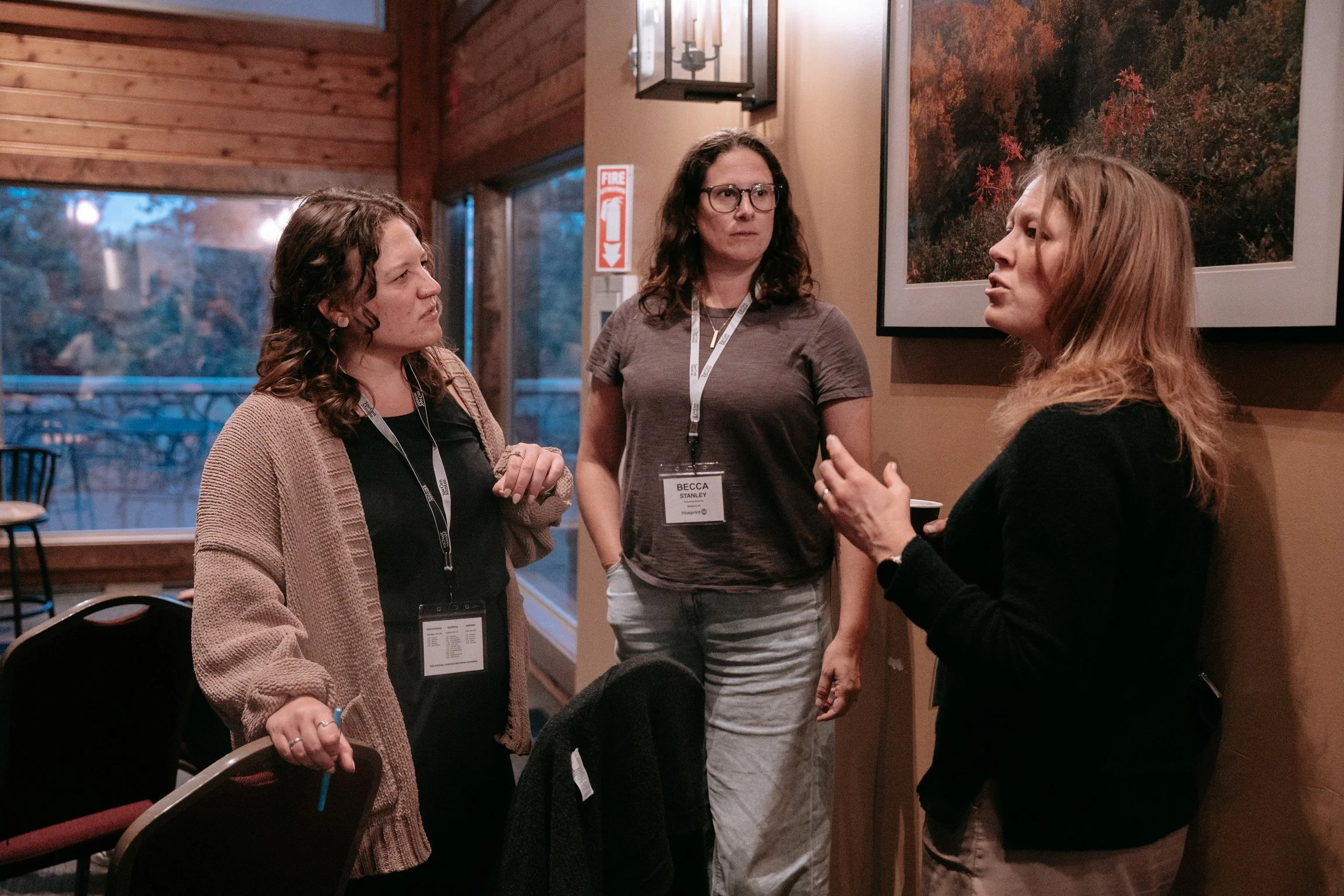
Opening Story
Jon slid his tray across the table and looked at me with a half-smile that felt more like a challenge than a greeting. The restaurant was louder than I expected, full of clinking silverware and overlapping conversations, but somehow the space at our table felt quiet in a different way, like something important was about to be said whether I was ready for it or not. Jeremy leaned back in his chair, unhurried, like he had nowhere else to be and nothing to prove. I realized pretty quickly that I had come in carrying more than I planned to admit. My shoulders were tight, my responses were quick, and I could feel myself defaulting to the version of me that keeps things moving but keeps people out.
They didn’t start by asking about my work. They didn’t ask how many kids we were serving or how things were growing. Instead, Jon made a joke at my expense, something about competition, and I laughed harder than it deserved. The tension broke just enough for me to notice how tired I actually was. A few minutes later, without much buildup, I said it out loud: I felt the weight, and I was worn down from carrying it. I realized in that moment that I had been leading for weeks without actually being known. No one rushed to fix it. No one offered a strategy. They just stayed present, and somehow that presence did more for me than any advice could have.
The Core Problem
One of the most subtle dangers in mentoring and leadership is how easy it is to normalize isolation. I don’t think most leaders set out to do this. In fact, most of us start with a deep desire for connection, collaboration, and shared purpose. But over time, the demands grow, the expectations increase, and the opportunities for honest friendship begin to shrink. Without realizing it, I can begin to believe that my role requires distance rather than closeness.
The pressure to always be “on” reinforces that belief. People look to me for direction, for clarity, for stability, and I start to think that letting them see my uncertainty or fatigue would somehow undermine my leadership. So I manage my image. I share updates instead of struggles. I talk about wins instead of doubts. And slowly, I build a version of leadership that looks strong on the outside but becomes fragile underneath.
Isolation doesn’t usually feel like a dramatic break; it feels like a slow drift that I justify along the way. I tell myself I don’t have time for deeper relationships. I convince myself that other leaders wouldn’t understand my context anyway. I assume that what I’m carrying is just part of the calling. But the truth is, when I stay in that place long enough, my perspective starts to distort.
Small challenges feel overwhelming because I’m carrying them alone. Other people’s success starts to feel threatening because I have no one helping me interpret it rightly. My internal dialogue gets louder and more convincing because it has no competition from truth spoken by someone else. What started as a season of busyness quietly becomes a pattern of aloneness.
The Core Principle
At some point, I had to come to grips with a simple but uncomfortable truth: I cannot lead others well if I am not allowing others to lead me. That realization challenged a lot of assumptions I didn’t even know I had. I had believed that leadership meant being the one who initiates, the one who provides, the one who carries. But I had not fully embraced the idea that leadership also requires receiving.
This is where friendship becomes more than just a nice addition to leadership; it becomes essential to it. When I am anchored in real relationships with other leaders who know me, challenge me, and remind me of what is true, I begin to lead from a place of stability rather than strain. I am no longer trying to manufacture strength on my own because I am drawing from a shared source of encouragement, truth, and perspective.
The principle is not complicated, but it is costly. It requires me to lower my guard, to be honest about what is really going on beneath the surface, and to invite others into places I would rather keep hidden. It requires intentionality, because these kinds of relationships do not happen accidentally. But when I step into it, I begin to experience a kind of leadership that is not sustained by effort alone, but by connection.
Expanded Insight
That lunch with Jon and Jeremy didn’t fix my circumstances. The pressures were still there when I left. The responsibilities didn’t shrink. But something shifted internally because I was no longer carrying it alone. There is a difference between having problems and having to carry them in isolation. That difference is what keeps a leader steady over time.
I started to notice how isolation had been shaping my thinking. When I was alone, everything felt more urgent and more personal. If something didn’t go well, I took it as a reflection of my leadership. If another organization experienced growth or favor, I felt a subtle comparison creeping in. It wasn’t always obvious, but it was there, influencing how I saw myself and others.
In community, those distortions began to lose their power. When I shared honestly about what I was feeling, it didn’t shock anyone. In fact, it was met with understanding and even familiarity. That alone helped me realize that I wasn’t as alone as I thought. Other leaders had walked through similar tensions, and their perspective helped me recalibrate my own.
Another thing that changed was how I viewed other leaders. When I didn’t know them personally, it was easy to reduce them to their outcomes. They were either “doing better” or “not doing as well,” and my mind filled in the rest. But when I sat across from them, heard their stories, and prayed with them, they became brothers instead of benchmarks. It is hard to compete with someone you have learned to love.
Over time, these relationships began to shape not just how I felt, but how I led. I became less reactive because I had space to process before responding. I became more generous because I was no longer operating from a scarcity mindset. I became more honest with the people I was leading because I was practicing honesty in my own friendships. The fruit showed up in ways I didn’t expect, not because I was trying to improve my leadership directly, but because I was tending to the relationships that sustain it.
Here are some practical ways to apply this principal:
Name your own isolation without softening it.
One of the first things I had to do was name my own isolation without softening it. I remember sitting alone after a long day and realizing that while I was constantly around people, very few of them actually knew what was going on inside me. That realization was uncomfortable, but it was necessary. When I said out loud, “I feel alone in this,” it stopped being something I could ignore and became something I needed to address.
Build a consistent rhythm with a small group of leaders.
From there, I made a deliberate decision to build a consistent rhythm with a small group of leaders. I didn’t overcomplicate it. We chose a regular time, committed to showing up, and set one simple guideline: for the first part of our time together, we wouldn’t talk about our work. That boundary forced us to engage as people before we engaged as leaders. It created space for conversations that would not have happened otherwise.
Confess what is actually going on beneath the surface.
I also had to learn how to confess what was actually going on beneath the surface. There were moments when I noticed jealousy or insecurity creeping in, especially when I saw others experiencing success in areas where I felt stuck. Instead of pushing those thoughts down or pretending they weren’t there, I started bringing them into the light with trusted friends. Saying, “I’m struggling to celebrate this right now,” felt vulnerable, but it broke the power those thoughts had over me.
Intentionally celebrate others, especially when it does not come naturally.
Another step that became important was intentionally celebrating others, especially when it didn’t come naturally. I would reach out to another leader, acknowledge what I saw God doing in their work, and genuinely encourage them. Over time, this practice began to reshape my heart. What started as a discipline became a genuine desire to see others thrive.
Let the rhythm extend beyond the scheduled meeting.
Finally, I realized that the monthly rhythm was just the starting point. If those relationships were going to truly sustain me, they needed to extend beyond a scheduled meeting. I began following up with individuals, sending a message during the week, or grabbing coffee with someone who had shared something significant. Those smaller moments of connection reinforced what was built in the larger gathering and made the relationships feel more personal and present in everyday life.
Conclusion
As I look back, I can see how easy it would have been to continue leading in isolation and call it faithfulness. On the surface, things might have continued to function, and the work might have even grown. But underneath, I would have become more fragile, more reactive, and more disconnected from the very people and purpose I was trying to serve. Leadership that lasts is not built on how much I can carry, but on how willing I am to let others carry it with me. The friendships I have built have not removed the weight of leadership, but they have made it possible to carry it with steadiness and perspective. And in the long run, that is what keeps me in the race.
Discussion Questions
Where am I currently carrying leadership responsibilities alone that were never meant to be carried in isolation?
Who is one person I can intentionally move toward this month to begin building a deeper, more honest friendship?
