
How to Invite Jesus Into a Mentoring Relationship
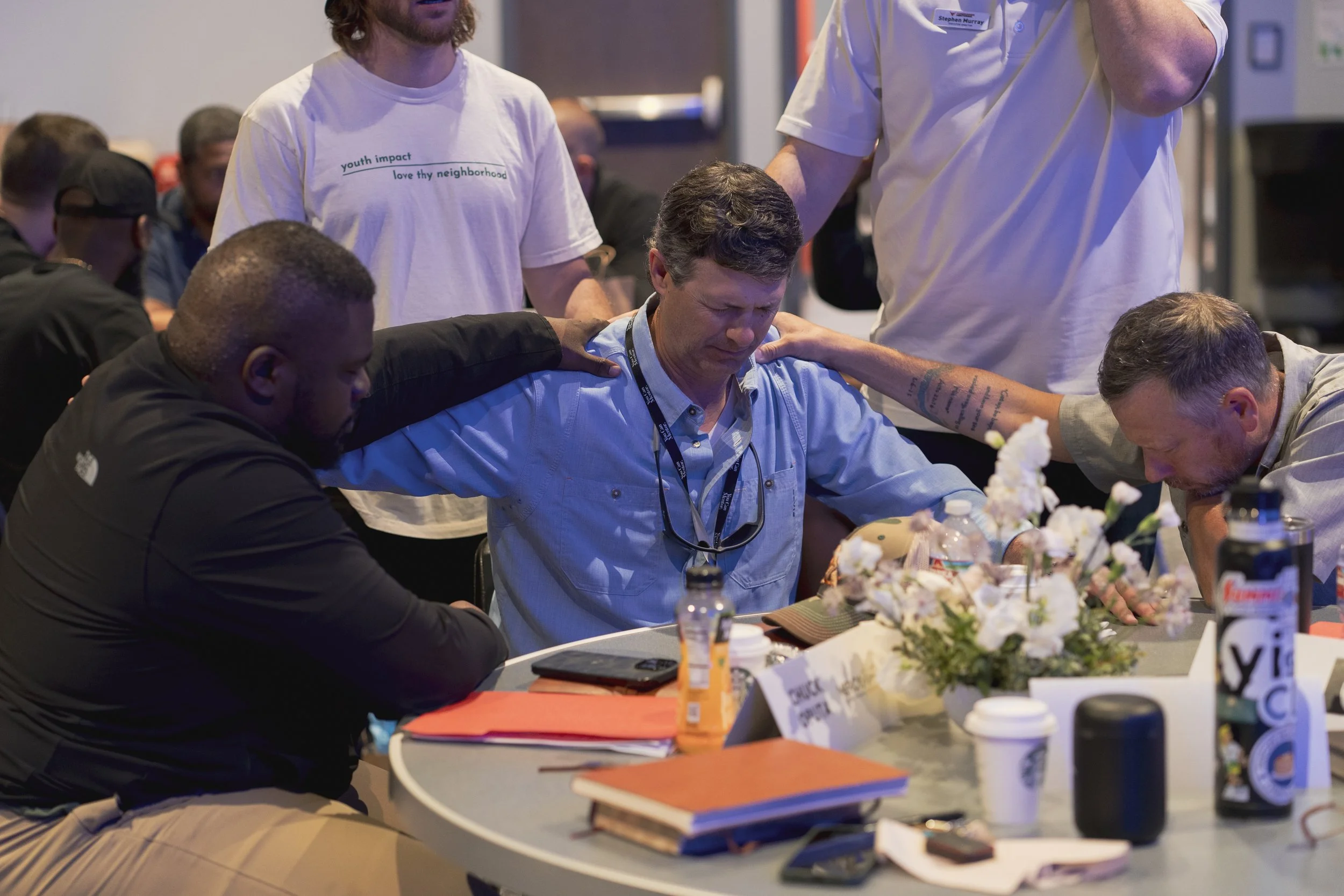
Opening Story
Humphrey slid his chair back just enough for it to squeak loudly against the tile, then rocked it forward again like he was testing how much noise he could get away with before I said something. His shoelaces were untied, one dragging under his foot as he twisted side to side, scanning the room for anything more interesting than the worksheet in front of him. When I caught his eye, he smirked like he knew exactly what he was doing, like this whole moment was a game and he was waiting to see how I would play it. I felt the familiar pull to correct him, to tighten things up, to bring some order to the chaos he seemed to carry into every room. But I hesitated, because I had started to realize something deeper was at stake than whether he finished his assignment or sat still for ten minutes. I wasn’t just sitting across from a restless second grader; I was sitting across from a future man who would one day need something stronger than behavior management to hold his life together. And in that moment, the question pressing on me wasn’t how to control him, but how to actually prepare him.
Core Problem
I have watched this play out in mentoring relationships more times than I can count, and I have felt the tension in my own heart as well. There is a strong pull to focus on what is visible and immediate, because that is what feels manageable. Behavior is obvious. Attitudes are noticeable. Choices are measurable. It feels productive to correct, guide, and shape those things, and in many ways, those actions are not wrong. The problem is that when mentoring becomes primarily about behavior, we start to believe that external change is the goal, rather than something deeper that actually sustains a person over time.
What I have learned, often the hard way, is that behavior can shift quickly in the right environment, but it rarely holds when the environment changes. A kid can learn how to act a certain way in front of me, in a program, or in a structured setting, but that does not mean they are internally anchored. When pressure comes later in life, when no one is watching, behavior alone is not enough. If I only teach a kid what to do, but never show them who to become or where to turn, I am leaving them underprepared for the weight of real life. That realization has forced me to rethink what I am actually aiming for in mentoring.
Core Principle
Over time, I have come to see that my calling as a mentor is not just to help a kid succeed in life, but to help them know and love Jesus in a way that becomes real and personal to them. That shift changes everything about how I show up. It moves me from trying to deliver information to inviting someone into a relationship that is already shaping my own life. Faith is not something I can hand off as a lesson; it is something I have to live in front of them as a reality.
When I think about what Humphrey actually needs, it is not just better habits or improved focus, although those things have their place. What he needs is something sturdy enough to carry him when life gets complicated. He needs a relationship with Jesus that is not dependent on a program, a mentor, or a moment, but one that he can access on his own when everything else feels uncertain. That kind of faith is not built through lectures or pressure. It is formed slowly, through exposure, through consistency, and through watching someone else live it out in ordinary moments.
Expanded Insight
I have noticed that many mentors feel a quiet pressure when it comes to faith. There is often a desire to introduce Jesus, but it is paired with uncertainty about how to do that without feeling awkward or forced. I have felt that tension myself. There have been moments where I wondered if I was saying too much or not enough, if I was being clear or coming across as artificial. What has helped me is realizing that the goal is not to perform faith well, but to live it honestly.
Kids are incredibly perceptive. They are not just listening to what I say; they are watching how I live. They notice what I talk about when I am not trying to teach. They notice what matters to me when things are easy and when things are difficult. They notice whether my faith feels like a separate category or something that is integrated into my life. More is caught than taught, and kids will often absorb what I live long before they respond to what I say.
With Humphrey, I started to let faith show up in ways that felt natural rather than scripted. I would mention something from my morning time with God if it connected to what we were talking about. I would pray with him when he was nervous about something coming up at school, not as a formal exercise, but as a simple conversation with God. I would say thank you to God out loud when something good happened, even if it was small. These moments were not dramatic, but they were consistent, and over time, they began to shape how he understood faith.
I also learned to pay attention to how I talked about Scripture. Instead of presenting it as something distant or overly complex, I started sharing it in ways that connected to real life. I would tell a story, ask a question, or explain something I had been thinking about. I wanted him to see that the Bible was not just something you read at church, but something that could actually speak into everyday situations. That shift made a difference, because it helped move faith from an abstract idea into something that felt accessible.
Another important piece for me has been community. I realized that if Humphrey only ever saw faith through me, his understanding would be limited. So I began inviting him into spaces where he could see other adults who loved Jesus and loved each other. He got to observe conversations, relationships, and interactions that were shaped by something deeper than surface-level connection. That exposure expanded his vision of what faith could look like in real life. It showed him that he was not alone and that there was a larger story he could be part of.
None of this has been about doing things perfectly. There have been plenty of moments where I felt like I missed opportunities or didn’t handle something as well as I could have. What has mattered more than perfection is consistency and authenticity. Kids do not need a flawless example; they need a real one. They need to see what it looks like to follow Jesus in the middle of ordinary life, with all its ups and downs.
Here are some practical ways to apply this principal:
Talk about your relationship with Jesus in simple, everyday ways.
One of the first shifts I would make is to start talking about my own relationship with Jesus in simple, everyday ways. Instead of saving those conversations for specific moments, I would look for natural opportunities to mention how my faith is shaping my decisions, my thoughts, or my perspective. This might look like sharing something I have been thinking about from Scripture or mentioning how I prayed about a situation earlier in the day. The goal is not to force a conversation, but to normalize the presence of faith in my life.Create small, consistent rhythms that include your mentee.
Another step I would take is to create small, consistent rhythms that include my mentee. This does not need to be complicated or overly structured. It could be as simple as praying together at the beginning or end of our time, asking what they are thankful for, or sharing a short story or verse that has been meaningful to me. These rhythms help build familiarity and comfort, and over time, they create space for deeper conversations to emerge naturally.Invite your mentee into appropriate community settings.
I would also make it a priority to invite my mentee into appropriate community settings where they can see faith lived out by others. This could be a gathering with friends, a church event, or any environment where relationships are shaped by a shared commitment to Jesus. The key is to let them observe and experience what it looks like when faith is lived out in community, not just talked about in isolation. This exposure can be incredibly formative, especially for kids who may not see that kind of environment elsewhere.Ask for permission and remain sensitive to where your mentee is.
Another important practice is to ask for permission and remain sensitive to where my mentee is. I want to respect their pace and their openness, rather than pushing conversations or experiences they are not ready for. This might look like asking if they are comfortable praying together or checking in about how they feel when we talk about faith. That posture builds trust and communicates that I care about them as a person, not just as someone I am trying to influence.Pay close attention to the consistency between what you say and how you live.
Finally, I would pay close attention to my own life and the consistency between what I say and how I live. This means being honest about my own struggles, continuing to grow in my relationship with Jesus, and allowing my mentee to see both the strength and the imperfection in my journey. When my life aligns with what I am inviting them into, it creates credibility and makes the invitation feel genuine rather than performative.
Conclusion
When I think back to moments like the one I had with Humphrey, I am reminded that mentoring is about far more than managing behavior or achieving short-term wins. It is about helping a kid build a foundation that will hold when life becomes difficult and complex. The most lasting impact I can have is not in what I teach them to do, but in how I show them where to turn. When I live a visible, growing relationship with Jesus and invite them into that reality, I am offering something that extends far beyond our time together. I am giving them a glimpse of a life that is anchored, sustained, and shaped by something greater than themselves, and that is a gift that can carry them long after the mentoring relationship ends.
Discussion Questions
What does your mentee currently observe about your relationship with Jesus through your everyday actions and conversations?
In what specific ways could you begin to model faith more naturally in your mentoring relationship this week?
