
Why Mentors Need to Show Up in a Kid’s World
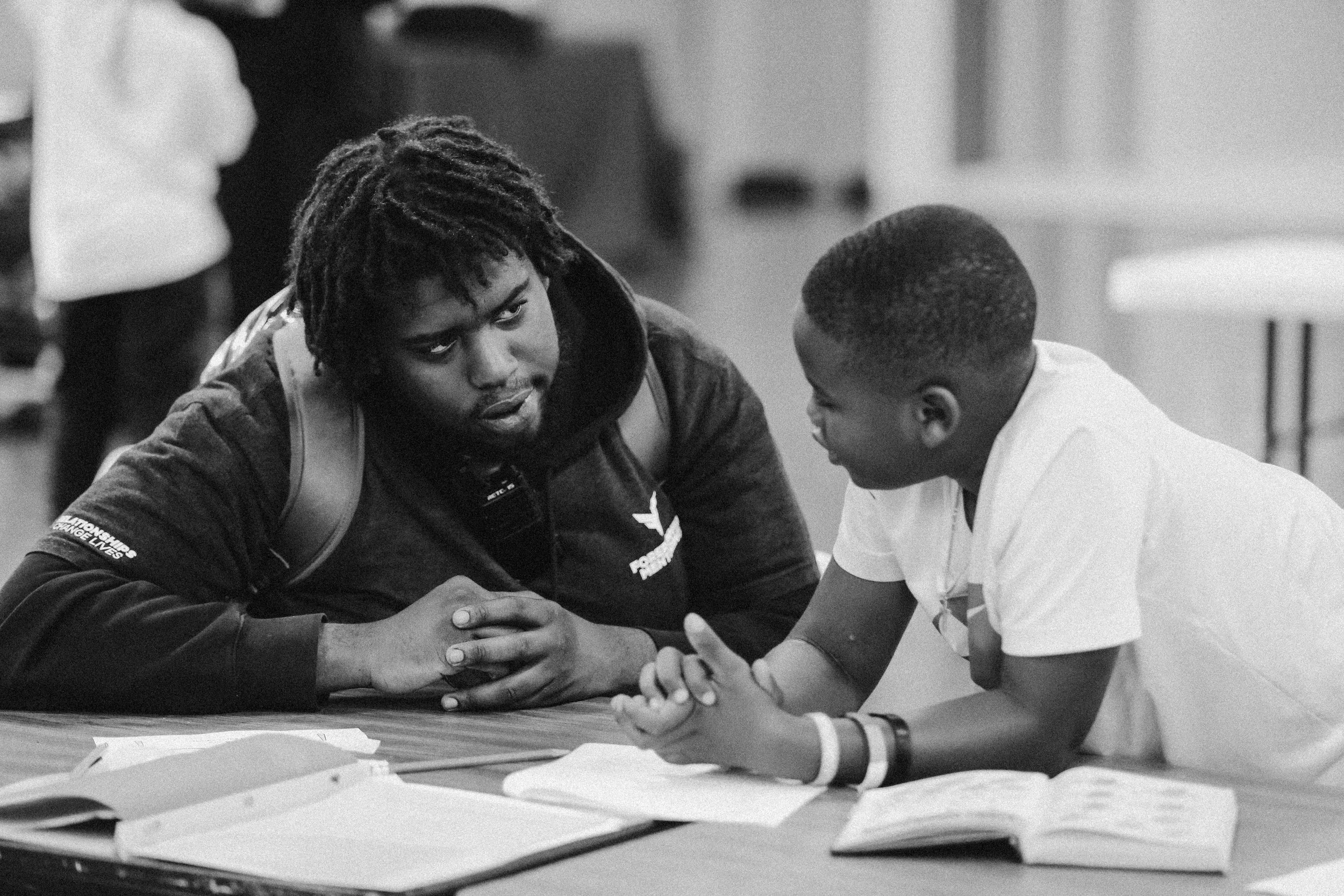
Opening Story
The blinker had been clicking for longer than it needed to, steady and rhythmic, filling the quiet space between James and me as we sat in the parked car.
He had not reached for the door handle yet, even though we had already pulled up to his house. His backpack sat at his feet, untouched, like leaving it there might buy him a few extra seconds before stepping back into whatever was waiting inside.
I asked a simple question. Nothing heavy. Nothing loaded.
“How was your day?”
James shrugged without looking at me. “It’s whatever.”
It would have been easy to interpret that as deflection or disinterest. I could have pushed for more. I could have tried to fill the silence or moved quickly into advice. But the longer we sat there, the more I sensed that this was not really about the question I had asked.
James was not testing whether I had the right words. He was testing whether this space we had just shared in the car was actually safe enough to carry anything real.
So I stayed quiet for a moment. Then I told him, “You do not have to talk about it right now. But I’m here whenever you want to.”
He did not say much after that. He picked up his backpack, opened the door, and headed inside.
But that moment stayed with me because it reminded me of something I have had to learn again and again in Christian youth mentoring: my role is not to force a breakthrough.
My role is to show up faithfully, create safety over time, and trust that God is working in the moments I cannot measure.
The Core Problem
Over time, I have realized that one of the biggest mistakes I can make as a mentor is believing my role is to fix what I see. When a kid lashes out, shuts down, or makes a decision that feels frustrating or confusing, my instinct is often to correct it as quickly as possible. I want to guide them toward better choices, healthier responses, and a more stable path forward. That desire isn’t wrong, but when it becomes my primary focus, I begin to measure success in all the wrong ways.
The truth is that many of the kids I mentor are navigating realities that I only see glimpses of. Their decisions are often shaped by environments, experiences, and survival patterns that have been forming for years. When I respond only to what is visible, I end up addressing symptoms instead of understanding causes. And when that happens, I can unintentionally communicate that their behavior is the problem, rather than recognizing that their behavior is often a response to something deeper.
I have also seen how this mindset creates discouragement. When I expect quick change, I inevitably feel like I am failing when it doesn’t happen. I begin to question whether what I am doing is making any difference at all. When I tie my sense of purpose to visible outcomes, I set myself up to lose heart in a work that was never meant to produce immediate results.
The Core Principle
The shift that has changed everything for me is simple, but it is not easy: my role is not to produce outcomes—it is to remain faithfully present. That means showing up consistently, building trust over time, and staying committed even when I don’t see the kind of progress I would hope for. It means believing that what I offer matters, even when I cannot measure it in the moment.
This perspective is deeply grounded in truth I have had to come back to again and again. As Paul writes in 1 Corinthians, “I planted, Apollos watered, but God gave the growth.” That reminder has reshaped the way I think about mentoring. I am responsible for showing up, investing, and being faithful with what is in front of me. I am not responsible for controlling how or when growth happens.
Faithfulness is not a lesser version of success—it is the assignment itself. When I begin to see mentoring through that lens, I am freed from the pressure of outcomes and invited into something far more sustainable and meaningful.
Expanded Insight
I have seen this play out in ways that have stretched me far beyond what I expected when I first started mentoring. There have been moments that felt incredibly significant, where I thought, “This is it—this is the turning point.” And sometimes those moments did matter. But more often than not, the real impact was happening in places that felt far less remarkable.
I think about the countless ordinary interactions that don’t make headlines. Sitting side by side on a couch. Driving to grab food. Listening to a story that seems repetitive or insignificant. Laughing at something that doesn’t feel important. These moments can feel small, but over time, they begin to stack up in a way that builds trust. And trust is the foundation for everything else.
There have also been moments that have broken my heart. Times when I have invested deeply in a relationship, only to see it disrupted by circumstances I cannot control. Families move. Situations change. Fear, instability, and outside influences pull kids away. And in those moments, I have felt the weight of how little control I actually have.
The story of Luke Whitmire and his work at Cross and Crown Mission captures this reality in a way that resonates deeply with my own experience. He describes a moment filled with chaos, tension, and fear—an ordinary day that quickly turned into something much heavier. A conflict over something as simple as a dog escalated into a broader situation that revealed the deeper realities these kids were living in. And when violence touched someone they loved and respected, everything shifted again.
What struck me most was not just the intensity of the moment, but what came after. A group of kids, connected to the person who caused harm, sat quietly, carrying fear and uncertainty. Their question—“Can we still come back?”—wasn’t really about permission. It was about belonging. It was about whether the relationship they had experienced could withstand the complexity of their situation.
And even though the answer was yes, they never returned. That is the part that stays with me. It reminds me that I cannot control outcomes, no matter how deeply I care. It reminds me that sometimes the story continues in ways I don’t get to see.
Mentoring often means loving people in chapters you will not get to finish. That realization has been both humbling and freeing. It forces me to let go of the idea that I am the central figure in someone else’s story. Instead, I get to play a part—a meaningful part—but still just a part.
This is where prayer becomes essential, not optional. When I recognize that the work is ultimately spiritual, I begin to rely less on my own ability to create change and more on God’s ability to work in ways I cannot see. Prayer is not something I turn to when I run out of options; it is the foundation that sustains everything I do.
It also reshapes how I interpret what looks like a lack of progress. If I believe that God is at work beyond what I can measure, then I can trust that even small moments of presence, encouragement, and truth are not wasted. They are seeds. And seeds do not produce fruit overnight.
Here are some practical ways to apply this principal:
Decide ahead of time that you are in it for the long haul.
One of the most important shifts I have had to make is deciding ahead of time that I am in it for the long haul. Before I ever step into a mentoring relationship, I need to settle in my own heart that I am not evaluating this based on quick wins or visible change. When I make that decision upfront, it changes how I respond in difficult moments. Instead of wondering whether it is “working,” I remind myself that staying is part of the work itself. This commitment becomes an anchor when circumstances feel uncertain or discouraging.Value ordinary time instead of constantly trying to create meaningful moments.
I have also learned to intentionally value ordinary time instead of constantly trying to create meaningful moments. Early on, I felt pressure to make every interaction count in a noticeable way. But I have realized that trust is rarely built in big, orchestrated conversations. It is built in the quiet, consistent presence of shared experiences. When I allow myself to simply be with a mentee, without an agenda, I create space for something deeper to develop naturally. Over time, those ordinary moments become the very thing that gives weight to anything I say.Be patient with when and how you speak truth.
Another step I take is being patient with when and how I speak truth. There are things I see that I want to address immediately, but I have learned that timing matters. If I speak too soon, before trust is established, my words can feel like criticism instead of care. So I wait. I pay attention. And when the relationship has enough foundation, I begin to gently name what isn’t healthy or true. Because that truth is now coming from a place of relationship, it has a chance to be received rather than resisted.Expect mess instead of closure.
I also remind myself regularly to expect mess instead of closure. There are situations I step into that I cannot fix, and there are outcomes I will not get to see resolved. When I resist that reality, I become frustrated and disillusioned. But when I accept it, I am able to stay present without carrying a weight I was never meant to carry. In those moments, sometimes the most honest and helpful thing I can say is, “I don’t know what to do, but I’m here with you.” That kind of presence often matters more than having the right answer.Build a rhythm of prayer into your mentoring.
Finally, I have built a rhythm of prayer into how I engage in mentoring. I pray before I show up, asking for wisdom, patience, and perspective. I pray during moments when I feel overwhelmed or unsure. And I pray for my mentees consistently, trusting that God is working in ways I cannot see. This practice keeps me grounded in the reality that I am not the source of transformation. I am simply participating in something much bigger than myself.
Conclusion (Bottom Line)
There is a cost to mentoring in this way. It requires me to release control, to embrace uncertainty, and to stay committed even when I do not see the results I hope for. It stretches my expectations and challenges my desire for clarity and resolution. But it also invites me into something deeper than I would experience otherwise. It allows me to be present in a way that reflects the kind of faithfulness I have received myself.
Showing up consistently may feel small, but it is often the very thing God uses to change a life over time. I may never see the full impact of what I invest, and I have to be okay with that. What I can do is remain faithful with what is in front of me, trusting that nothing offered in love is wasted. When I shift my focus from outcomes to presence, I find a steadiness that sustains me in the long run.
And in the end, that is what keeps me going—not the promise of visible success, but the conviction that faithfulness itself is meaningful, even when the results remain unseen.
Discussion Questions
Where in my mentoring relationships am I placing pressure on outcomes instead of focusing on faithful presence?
How might my approach change if I truly believed that the most important work is happening in the moments I cannot measure?
