
How Mentors Help Kids Know They Are Not Alone
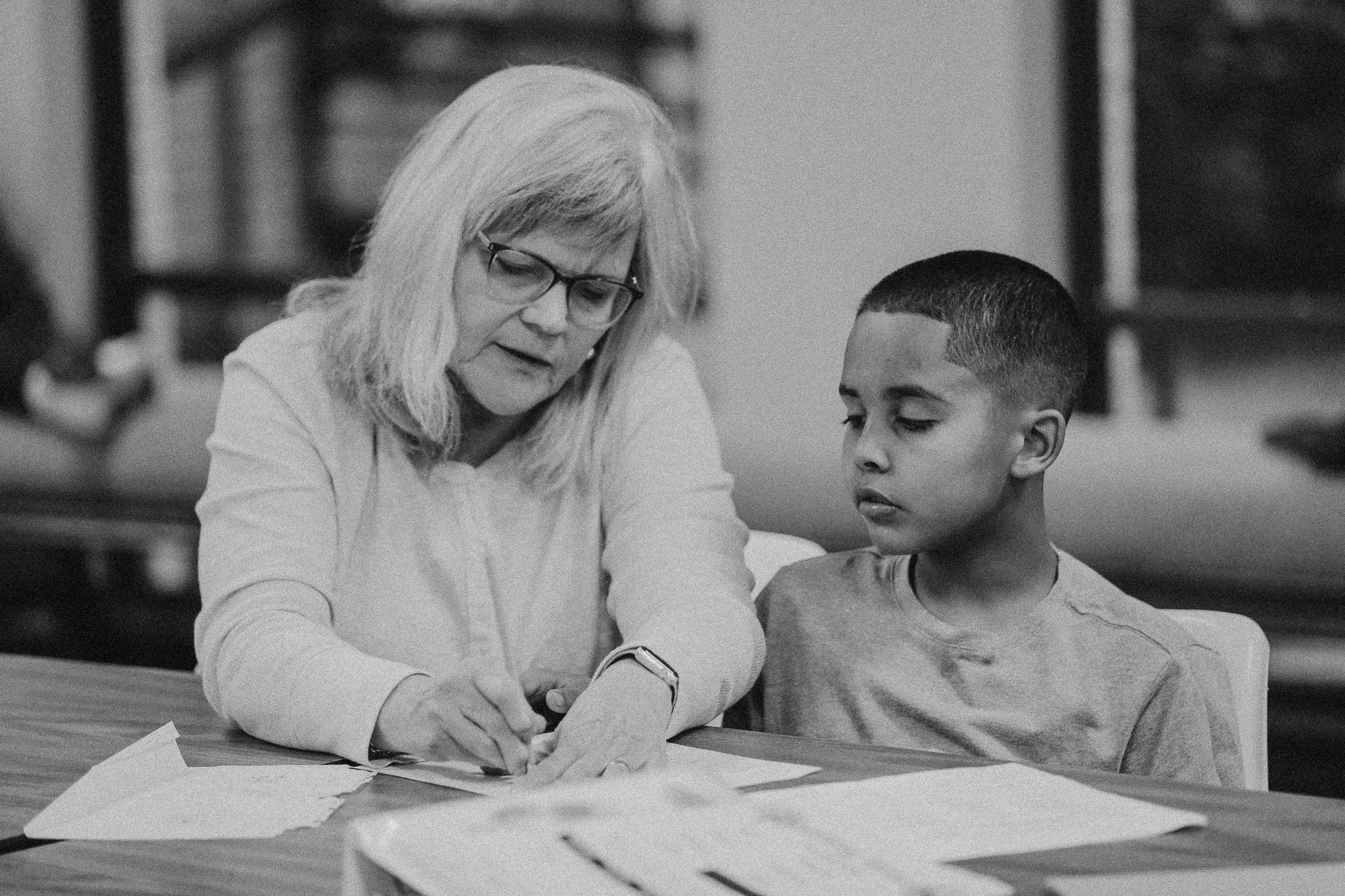
Opening Story
The fluorescent lights in that small office hummed just loud enough to fill the silence between Dillon and me.
He sat across from me, legs swinging slightly under a chair that was just a little too big, his eyes never settling in one place for long. Every few seconds, he scanned the room like he was mapping exits, even though nothing about that space was threatening. I had learned by then that the room is not always what a kid is responding to. Sometimes they are reacting to rooms from years ago that never felt safe.
Dillon talked about school first, brushing it off with quick, shallow answers that felt more like deflection than conversation. Then he shifted to where he was living, mentioning different homes and different people as if it were routine. The words themselves were calm, almost detached, but his body told a different story. His knee bounced constantly, and his voice flattened anytime something even hinted at family.
As I listened, my mind kept drifting to my own home. I thought about the stability my kids experience without even realizing it, the predictability of dinner at the table, the consistency of waking up in the same place every day. I felt the quiet tension rise in me, the urge to fix something I could not fix.
But I could not rewind Dillon’s story or erase the instability he had carried. So instead, I stayed. I asked small questions, careful not to push too hard, and I listened without trying to steer him somewhere more comfortable.
When Dillon offered a small, almost hidden comment about something painful, I resisted the instinct to jump in with advice or reassurance. I simply said, “If that happened to me, I think that would really hurt. That would make it hard to trust people.”
He paused, watching me closely, like he was deciding what kind of adult I was going to be.
Then he kept talking.
And in that moment, I was reminded of something I have to relearn over and over again: mentoring is not about solving a child’s story. It is about stepping into it with them and refusing to leave.
Core Problem
One of the most common mistakes I see in mentoring—one I’ve made myself more times than I’d like to admit—is assuming that my role is to fix what’s broken. When I sit across from a kid who has experienced instability, loss, or trauma, something in me wants to bring resolution as quickly as possible. I want to offer clarity, direction, and solutions that move them toward a better outcome.
That instinct isn’t wrong in itself, but it becomes a problem when it overrides what the child actually needs. When I rush to fix, I unintentionally communicate that their story is something to be managed rather than something to be understood. I turn moments that could build trust into moments that reinforce distance. The child learns that even this adult is more comfortable giving answers than sitting in the tension.
What makes this even more complicated is that trauma doesn’t always show up in obvious ways. I used to think of trauma in terms of extreme situations—abuse, violence, or major life disruption. But over time, I’ve realized that trauma often looks much quieter than that. It can be the chronic instability of moving from place to place, the subtle but constant feeling of being unwanted, or the slow accumulation of moments where a child learns that the world is not safe.
When I misunderstand trauma, I misread behavior. And when I misread behavior, I respond in ways that miss the child entirely. Instead of seeing a protective response shaped by experience, I see defiance or disengagement. Instead of recognizing fear, I interpret apathy. That disconnect leads me to respond with correction when what is needed is connection.
The deeper issue is that I begin to prioritize progress over presence. I start measuring success by visible change instead of relational depth. And in doing so, I unintentionally create an environment where the child feels pressure to perform rather than freedom to be known.
Core Principle
At the center of all of this is a simple but challenging truth that I have had to return to again and again: my role as a mentor is not to rescue—it is to remain.
That principle sounds straightforward, but it reshapes everything about how I approach a relationship. When I shift from trying to rescue to choosing to remain, I stop putting pressure on myself to produce outcomes that are outside of my control. I stop measuring my effectiveness by how quickly things improve, and I begin to focus on whether I am showing up consistently and faithfully.
Remaining requires patience. It requires me to sit in conversations that don’t resolve neatly. It requires me to listen to stories that I can’t fix and to resist the urge to redirect them toward something more comfortable. It also requires humility, because I have to accept that I am not the hero of this story.
At the same time, remaining is not passive. It is an active, intentional presence that communicates something powerful to a child who has experienced instability: I am not going anywhere. I am here, and I will continue to be here, even when things are messy, confusing, or slow to change.
This is where mentoring begins to reflect the heart of Christ in a tangible way. Jesus did not avoid brokenness or rush past it. He entered into it fully and remained present within it. If I want my mentoring to reflect that same heart, I have to be willing to do the same—to step into the reality of a child’s experience and stay there with them.
Expanded Insight
As I have continued to mentor over the years, I have started to notice how deeply connected trauma and identity really are. Every child is already asking questions about who they are and where they belong, but trauma complicates that process in profound ways. It introduces narratives that shape how they see themselves long before they have the maturity to question those narratives.
I have sat with kids who, without ever saying it directly, carried beliefs like “I’m not worth staying for,” or “People always leave,” or “I have to take care of myself because no one else will.” These beliefs are rarely formed through a single moment. They are built over time, through repeated experiences that reinforce the same message.
When I come into that space as a mentor, I am not starting from a neutral baseline. I am stepping into a story that has already been written in many ways. That means my words matter, but my consistency matters even more. A single encouraging conversation cannot undo years of instability, but a consistent presence over time can begin to challenge those deeply held beliefs.
I think back to that boy in the office and how carefully he watched my response. That moment wasn’t just about what I said; it was about what my response represented. Was I going to judge him? Was I going to minimize what he shared? Was I going to turn it into a lesson or a lecture? Or was I going to stay present and receive what he offered without making him regret opening up?
In mentoring, trust is not built through what I say once—it is built through how I respond over time. Every interaction either reinforces safety or erodes it. Every response either invites deeper honesty or encourages the child to shut down.
This is why listening becomes such a critical part of mentoring. Not listening as a strategy to gather information, but listening as a way of communicating value. When I listen without interrupting, without correcting, and without rushing to conclusions, I am telling that child that their story matters. I am pushing back against the quiet lie that no one cares enough to really hear them.
There have been many moments where I have felt the tension of wanting to say more than I should. I have wanted to offer solutions, to provide clarity, or to point them toward a better path. And while there is a place for guidance, I have learned that timing is everything. If I move too quickly into advice, I can short-circuit the very process that builds trust.
I have also seen how powerful it is to use language that centers empathy rather than instruction. When I say, “If that happened to me, I think I would feel…” I am not telling the child what they should feel. I am simply opening the door for them to explore their own emotions. That kind of response validates their experience without taking control of it.
Over time, those small moments begin to add up. The child starts to realize that this relationship is different. It is not transactional. It is not conditional. It is not dependent on performance or behavior. It is rooted in presence.
And that presence does something that advice alone never could. It creates a space where the child can begin to process their own story, to question the narratives they have believed, and to consider the possibility that they are not alone.
Here are some practical ways to apply this principal:
Slow down your response in conversations.
One of the most important shifts I have had to make is choosing to slow down my response in conversations. When a child shares something difficult, my instinct is often to fill the space quickly, either with reassurance or direction. Instead, I have learned to pause and let the moment breathe. That pause communicates that I am not in a hurry to move past what they said. It gives them room to add more, and it shows them that I am willing to sit with whatever they bring, even if it is uncomfortable.Ask open-ended questions that invite honesty without pressure.
Another practical step I take is intentionally asking open-ended questions that invite honesty without pressure. Rather than asking questions that lead toward a specific answer, I try to ask things like, “What has that been like for you?” or “How did that make you feel?” These kinds of questions create space for the child to share at their own pace. They also signal that I am more interested in understanding their experience than directing it.Pay close attention to your nonverbal responses.
I also pay close attention to my nonverbal responses, because I have learned that kids often read my face and tone before they process my words. If I react with surprise, concern, or judgment, even unintentionally, it can shut the conversation down quickly. I try to maintain a steady, calm presence that communicates acceptance. This doesn’t mean I approve of everything they share, but it does mean I receive it without making them feel exposed or wrong.Resist turning every meaningful moment into a teaching moment.
Another step that has been critical for me is resisting the urge to turn every meaningful moment into a teaching moment. There is a time for guidance and direction, but not every conversation needs to end with a takeaway or a lesson. Sometimes the most impactful thing I can do is simply acknowledge what they shared and thank them for trusting me with it. That reinforces the relationship in a way that advice often cannot.Follow up consistently after important conversations.
I have also found it helpful to follow up consistently, especially after a conversation where a child has opened up. A simple check-in like, “I’ve been thinking about what you shared last time,” communicates that the conversation mattered and that they matter. It reinforces the idea that I am not just present in the moment, but that I am carrying their story with me.Define success by faithfulness rather than immediate outcomes.
Finally, I remind myself regularly that progress in mentoring is often slow and difficult to measure. Instead of looking for immediate change, I try to focus on consistency. Am I showing up? Am I listening well? Am I creating a space where this child can be honest? When I define success by faithfulness rather than outcomes, I free myself to mentor in a way that is both sustainable and deeply impactful.
Conclusion (Bottom Line)
As I think back on that conversation in the small office, I realize that nothing about it would stand out from the outside. There was no breakthrough moment, no dramatic shift, no clear resolution. And yet, it was deeply significant. It was a moment where a child tested whether it was safe to be honest, and I had the opportunity to respond in a way that either built trust or broke it.
Mentoring is full of those moments. They are often quiet, easily overlooked, and impossible to measure in the short term. But they are where the real work happens. They are where a child begins to experience something different from what they have known before.
At the end of the day, mentoring is not about having the right answers—it is about being the right presence. It is about showing up consistently, listening deeply, and refusing to walk away when things are complicated or slow to change. It is about reflecting the heart of Christ in a way that is tangible and relational.
I cannot fix a child’s past. I cannot control their future. But I can choose to remain present in their story. And sometimes, that is exactly what they need most.
Discussion Questions
When you feel the urge to fix or solve a situation in mentoring, what might be driving that instinct, and how could choosing presence instead change your response?
In what ways can you intentionally create a safer space for your mentee to share honestly without fear of judgment or correction?
