
Why Relationships Change Lives in Mentoring
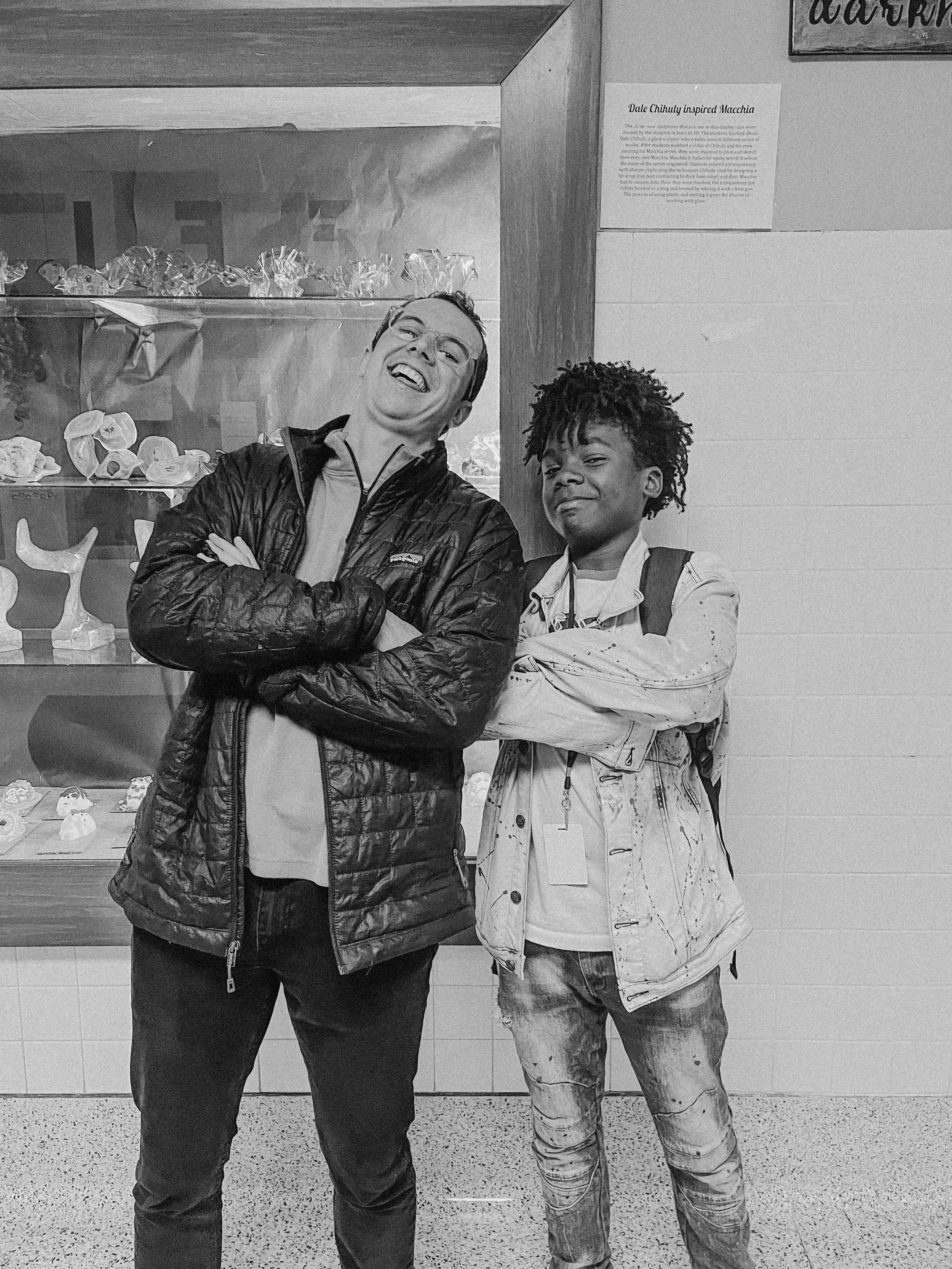
Opening Story
The gym was louder than usual that night. Sneakers squeaked across the floor, parents shouted from the bleachers, and the scoreboard flickered with every possession.
I was watching Sterling, a kid I had spent years with, play one of the best games of his life. He moved with confidence, made smart decisions, and by the final buzzer, he had scored more points than anyone else on the court.
But when the game ended, Sterling’s shoulders dropped.
Instead of celebrating, he walked off the court frustrated, almost angry. I caught up with him near the bench and asked what was wrong.
He shook his head and said, “I should’ve had 40.”
It was not said casually. It came out like a disappointment that ran deeper than the game itself.
Because I knew Sterling’s story, I knew this was not really about basketball. It was about a father who showed up sometimes and a pattern that had quietly formed over the years: attention when he performed, distance when he did not.
In that moment, it became painfully clear to me that Sterling was not chasing points. He was chasing connection.
What looked like ambition on the surface was really a deeper hunger to feel seen, wanted, and valued.
That night stayed with me, not because of the game, but because of what it revealed. It reminded me how easy it is to misread what is happening in a kid’s heart when I only look at the surface.
Core Problem
One of the most common mistakes I see in mentoring is how quickly we interpret behavior without understanding the need behind it. I have done this myself more times than I want to admit. A kid acts out, and I assume defiance. A kid withdraws, and I assume disinterest. A kid performs at a high level, and I assume everything is fine. But over time, I have learned that those assumptions almost always fall short of the truth.
The reality is that many kids, especially those from hard places, are not primarily driven by rebellion or apathy. They are driven by unmet relational needs. When those needs go unrecognized, their behavior becomes the language they use to communicate what they don’t yet have words for. If I only respond to the behavior, I miss the message entirely.
Isolation only makes this worse. When a child feels alone—emotionally or relationally—their internal narrative starts to shift. Lies become louder. Shame takes root. They begin to believe things about themselves that were never meant to define them. And if I step into that situation without awareness, I can unintentionally reinforce those lies instead of helping to dismantle them.
When I treat behavior as the problem, I end up responding to symptoms instead of addressing the source.
This is where mentoring can either become deeply impactful or quietly ineffective. The difference often comes down to whether I am willing to slow down long enough to understand what is really going on beneath the surface.
Core Principle
The longer I have been mentoring, the more convinced I have become of this simple but transformative truth: relational need is not a weakness—it is part of God’s design. From the very beginning, before anything was broken, God declared that it was not good for man to be alone. That means the need for connection is not something to fix; it is something to honor.
This changes how I see the kids I mentor. It also changes how I see myself. Needs are not the problem. The problem is where and how those needs get met. When a child has healthy, consistent relationships, those needs are nurtured in life-giving ways. When they don’t, they find other ways to cope.
And kids are incredibly creative when it comes to coping.
Some learn to perform, believing that achievement will earn them love. Others act out, discovering that negative attention is still attention. Some withdraw completely, deciding it is safer not to need anyone at all. Different expressions, same root. They are all trying to answer the same question: “Am I wanted?”
When I understand that, everything begins to shift. I stop trying to fix behavior and start paying attention to the need driving it.
Expanded Insight
There have been moments in my mentoring journey where this reality has confronted me in ways I could not ignore. I think about times when I have seen a kid push me away right after I showed up for them. Early on, that used to frustrate me. It felt confusing, even discouraging. But over time, I started to recognize a pattern. Rejection wasn’t always rejection. Sometimes it was protection.
If a child has experienced inconsistent love, then consistent love can feel unfamiliar. And what is unfamiliar often feels unsafe. So they test it. They push on it. They see if it will hold. That is not resistance—it is a question being asked through behavior.
Sometimes the behaviors that frustrate me the most are actually invitations to show up more faithfully.
I have also seen this play out in kids who seem to have everything together. They are high achievers, well-liked, and externally successful. But underneath that is a quiet pressure to perform. Their identity becomes tied to what they can produce. And when they fall short—even slightly—it feels devastating because it threatens the very thing they believe makes them valuable.
That is why the message of performance-based love is so dangerous. It teaches a child that they are only as good as their last success. And if I am not careful, I can reinforce that without even realizing it. Every time I celebrate achievement without affirming identity, I risk strengthening that belief.
On the other hand, I have also walked with kids who have experienced deep trauma, where the response is not performance or acting out, but numbness. They do not react the way I expect them to. They seem indifferent, disconnected, or emotionally distant. In those moments, it would be easy to assume they do not care. But I have learned that numbness is often a sign of pain that has gone unprocessed for too long.
In those situations, mentoring requires a different kind of attentiveness. It requires patience. It requires discernment. It requires me to pay attention not just to what is being said, but to what is missing.
What ties all of this together is the understanding that behavior is rarely random. It is shaped by story, environment, and experience. When I begin to see kids through that lens, I become more compassionate, more curious, and more intentional in how I respond.
Here are some practical ways to apply this principal:
Start by identifying the need behind the moment. When I see a specific behavior—whether it is frustration after a game, withdrawal during a conversation, or acting out in a group setting—I try to pause and ask myself what the child might actually be seeking. In the case of the kid at the basketball game, the issue was not missed shots; it was a desire for connection with his dad. That question helps me move from reaction to understanding, which changes the entire direction of my response.
Say what they actually need to hear, not just what makes sense in the moment. In situations where performance is driving identity, I intentionally separate achievement from worth. Instead of saying, “You played great,” I say something like, “I love watching you play, but I care about you way more than how you perform.” That distinction may feel small, but over time it begins to reshape what they believe about themselves.
Respond consistently, especially when they test the relationship. When a kid pushes me away or reacts negatively after I show up, I remind myself that this is often part of their process. Instead of pulling back, I stay steady. I follow through on what I said I would do. I show up again the next time. That consistency communicates something deeper than words ever could—that I am not going anywhere.
Pay attention to patterns, not just isolated moments. One behavior on its own can be misleading, but patterns tell a story. If I notice repeated frustration tied to performance, or repeated withdrawal in certain environments, I begin to piece together what might be happening beneath the surface. That awareness allows me to respond more intentionally instead of guessing in the moment.
Create moments that meet relational needs directly. Instead of only interacting around activities or outcomes, I look for ways to intentionally offer attention, affirmation, and acceptance. That might look like setting aside time to just talk, affirming something about their character, or simply being present without an agenda. These moments often feel small, but they are the ones that build trust over time.
Invite other healthy relationships into their world. I have learned that I am not meant to meet every need a child has. Part of my role is helping them experience a broader network of safe, consistent relationships. Whether that is connecting them to other mentors, a church community, or trusted adults, I want them to see that they are not alone and that there are multiple places where they can be known and supported.
Conclusion (Bottom Line)
When I think back to that night in the gym, I am reminded that mentoring is rarely about what it appears to be on the surface. A missed shot, a strong performance, a moment of frustration—these are often just the visible expressions of something much deeper. If I am willing to look beyond the behavior, I begin to see the real story unfolding underneath.
Mentoring becomes powerful when I stop trying to manage behavior and start learning how to meet relational needs.
That shift does not make mentoring easier, but it makes it more meaningful. It calls me to be more patient, more aware, and more faithful in how I show up. It reminds me that I am not there to fix a child, but to walk with them as they learn what it means to be seen, known, and valued.
Over time, those steady, consistent moments begin to add up. A child who once believed they had to earn love starts to experience it freely. A child who felt alone begins to trust that someone is with them. And in those quiet, often unseen ways, something deeper begins to change.
Not just behavior, but belief. Not just actions, but identity.
Discussion Questions
When I think about the kids I mentor, what behaviors might actually be pointing to deeper relational needs that I have not yet fully considered?
In what ways might I be unintentionally reinforcing performance-based love, and how can I begin to consistently communicate acceptance instead?
