
Why Mentors Should Show Up Where Kids Actually Live
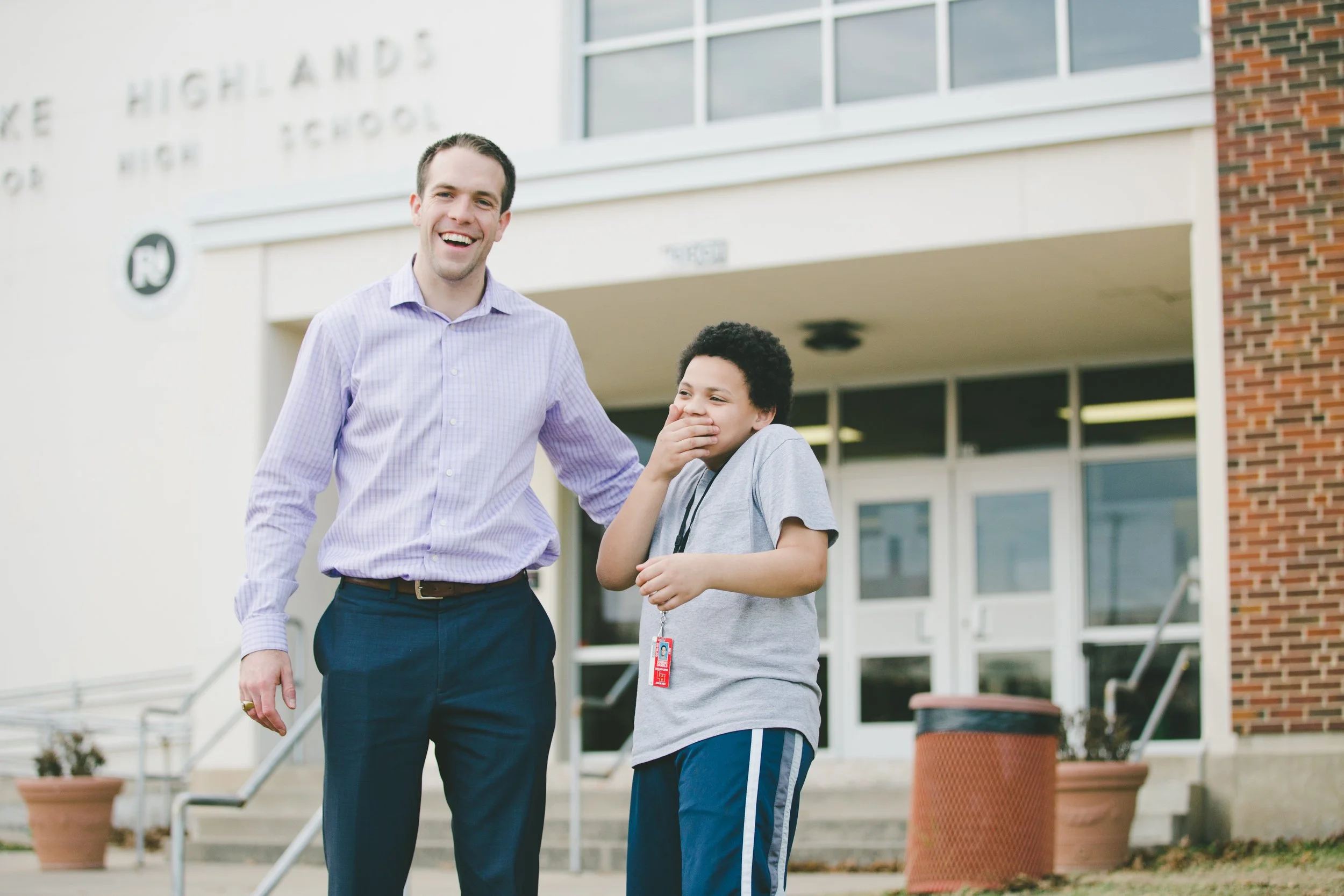
The screen door slammed above me before I saw Micah. It was the kind of hollow bang that makes a whole apartment building pause for half a second, then return to normal like nothing happened.
I had just stepped onto the cracked sidewalk between two rows of apartments. A few kids were arguing near the stairwell, voices sharp and fast, their words overlapping until nobody seemed to be listening anymore.
Micah sat on the curb by himself, dragging a stick through a patch of dry dirt. Back and forth. Back and forth. He had made a groove so deep it looked like he had been working on it for a while.
He was not crying. He was not asking for help. He was not looking around to see who noticed him.
That was what caught my attention. He had learned how to disappear without leaving.
I was on my way to the learning center, where I had a plan, a schedule, and people waiting. Stopping felt inefficient, and everything in me likes efficiency more than I want to admit.
But Micah’s stillness said something the noise around him did not. So I slowed down, walked over, and sat on the curb a few feet away.
I did not ask what was wrong. I did not try to make the moment meaningful. I said, “Man, it is hot out here.”
He shrugged, eyes still on the dirt. But he did not get up.
For several minutes, that was the whole conversation. Heat, dirt, silence, and presence.
Looking back, I think that was the meeting I actually needed to be in.
Some Kids Will Not Cross the Threshold
A lot of mentoring programs are built around the idea that kids will come to us. We create a good space, set a schedule, plan activities, recruit volunteers, and invite kids to show up.
Sometimes that works. Many kids do come, and good things happen when they do.
But there are always kids who never make it across the threshold. They may live close to the program and still feel far away from it.
The barrier is not always motivation. Sometimes it is access. Sometimes it is family stress, transportation, fear, distrust, or the simple fact that walking into a new room full of adults feels like too much.
If mentoring depends on a child entering my world first, I may miss the child who needs someone to enter theirs. That realization has changed the way I think about outreach, presence, and ministry.
Movement Comes Before Invitation
Effective mentoring often begins with movement, not invitation. I have to move toward the young person before I expect the young person to move toward me.
That sounds simple, but it costs something. It costs comfort, convenience, control, and sometimes the clean lines of a program schedule.
When I go where kids already are, I communicate something before I ever speak. I am saying, “You are worth the walk. You are worth the interruption. Your world matters enough for me to enter it.”
Micah did not need a flyer that day. He needed someone to sit on the curb.
That does not mean programs do not matter. They matter deeply. But programs become stronger when they are connected to the real places where kids live, wait, play, fight, hide, and heal.
Dennis Knew the Sidewalk
A mentor named Dennis taught me a lot about this. He spent his days inside an apartment complex where the weight of life was visible if you knew how to look.
He noticed the police car parked a little too long. He noticed which kids were outside late and which doors opened when voices got loud.
He noticed cars with damage that had become part of the scenery, including one with bullet holes that a student pointed out like she was naming the color of the paint. She was not dramatic about it.
She simply said it and moved on. That is what struck me.
What should have been alarming had become normal. When a child’s normal includes things that should never be normal, a one-hour program cannot carry the full weight of formation by itself.
Kids need places of safety, and they also need safe people who understand the places they come from. Dennis had credibility because he knew the sidewalk, the stairwells, the families, and the everyday rhythm of that community.
Normal Is a Powerful Teacher
Environment disciples kids long before a mentor says a word. A child learns what is safe, what is expected, what gets attention, and what can be trusted from the world around them.
If tension, absence, instability, or danger have become normal, then peace may feel strange at first. Predictability may even feel suspicious.
This is why proximity matters. If I do not know a child’s normal, I may misread their response when they enter a healthier space.
A kid who seems restless in a calm room may not be disrespectful. Calm may feel unfamiliar.
A kid who does not react to something serious may not be cold. They may have had to adapt to things no child should have to adapt to.
Going where kids live helps me see the story more clearly. It gives me context, and context helps me respond with humility.
The Learning Center Was a Different Kind of Normal
Inside the learning center, the tone changed. Kids worked on homework, asked for snacks, laughed too loud, and argued over pencils.
It was still imperfect because every real space with kids is imperfect. But there was a different kind of rhythm.
Adults were present. Expectations were clear. People came back the next day.
That consistency mattered more than any single activity. The children were not experiencing a special event. They were experiencing a repeated alternative to the chaos around them.
Over time, safe repetition forms new expectations. A kid begins to think, “This door will open. This adult will remember me. This place will still be here.”
That kind of trust is rarely built through intensity. It grows through return.
Families Watch Before They Trust
When mentoring moves into a child’s everyday world, it naturally touches the family too. Parents, grandparents, siblings, and neighbors begin to notice who shows up and who keeps showing up.
At first, some adults may be cautious. That caution is understandable.
They may have seen programs come and go. They may have experienced people who showed interest for a season, took pictures, made promises, and disappeared.
So trust with families often begins without a formal conversation. It begins with a wave, a name remembered, a greeting at the doorway, or a calm presence in the same place week after week.
I have seen a parent go from distant to warm simply because she watched consistent care over time. She did not need a pitch. She needed evidence.
Jesus Walked Into People’s Lives
I think about Jesus often when I think about proximity. He walked roads, entered towns, sat at tables, touched people others avoided, and noticed people at the edges.
He did not love from a distance. He came near.
That challenges me because coming near sounds beautiful until it becomes inconvenient. It means entering places I cannot fully control and slowing down enough to notice people I could easily pass.
Christian mentoring should carry that same movement. We go because Christ came to us.
We enter the lives of young people with humility, not as saviors, but as witnesses to the Savior who moves toward the lonely, overlooked, and weary.
Stay Long Enough to Become Familiar
One visit can make an impression. Repeated presence builds trust.
Micah did not say much that first day on the curb. The next week, he saw me and gave me the smallest nod imaginable.
A few weeks later, he asked if the learning center had snacks. Then he asked if I knew how to fix a bike chain.
That was not random. He was moving closer in the way he knew how.
Familiarity lowers fear. When kids see the same adult in the same place over time, uncertainty begins to shrink.
They do not have to decide all at once if you are safe. They can gather evidence slowly.
Practices for Going Where Kids Are
Choose one place
Pick a specific environment and become consistent there. A school pickup area, apartment complex, neighborhood park, gym, or learning center can become a place where trust has time to grow.
Observe before acting
Pay attention to rhythms, relationships, stress points, and natural gathering places. Listening to the environment first will help you serve with greater wisdom.
Start small
Use simple greetings, short conversations, and ordinary presence. Do not force depth before trust has had time to form.
Engage families naturally
Learn names, greet caregivers, ask simple questions, and be consistent. Familiarity with families strengthens the mentoring relationship around the child.
Create predictable rhythms
Kids from unstable places need repeated experiences of safety. Keep certain routines steady so they know what to expect.
Pace the work
Do not try to meet every need at once. Deep presence over time will usually matter more than scattered efforts everywhere.
Micah Eventually Came Inside
One afternoon, I was setting out pencils when Micah appeared in the doorway. He did not announce himself.
He stood there with one hand on the frame and asked, “Y’all got math help in here?”
I said, “We do.” He stepped inside like he had been thinking about it for a long time.
That first curb moment did not change everything. It simply began something.
I had gone to his world before asking him to enter mine. By the time he came through the door, I was not a stranger with a program.
I was the guy who sat on the curb, remembered his name, and kept coming back.
Presence That Outlasts the Moment
Mentoring does not always begin with a sign-up form or a planned meeting. Sometimes it begins on a curb, in a hallway, by a stairwell, or beside a child who seems invisible to everyone else.
If I want to reach kids who are not coming through the door, I have to be willing to walk outside it. That is slower work.
It will not always feel efficient, but efficiency has never been the highest goal of love. Faithfulness often looks like showing up in the same place until people begin to believe you mean it.
Go where kids live. Learn the names. Notice the sidewalks, the doorways, the rhythms, and the families.
Sit down before you speak too much. Let presence carry the first message.
Over time, a child who once stayed on the curb may step inside. And when he does, he may already know something deeper than the program schedule.
He may know someone came looking for him first.
Discussion Questions
Where are you currently expecting kids to come to you before you have gone to them?
What specific place could you commit to showing up consistently so kids and families begin to recognize your presence?
How can you slow down enough to observe a child’s everyday world before trying to shape it?
