
How Mentors Earn the Right to Be Heard
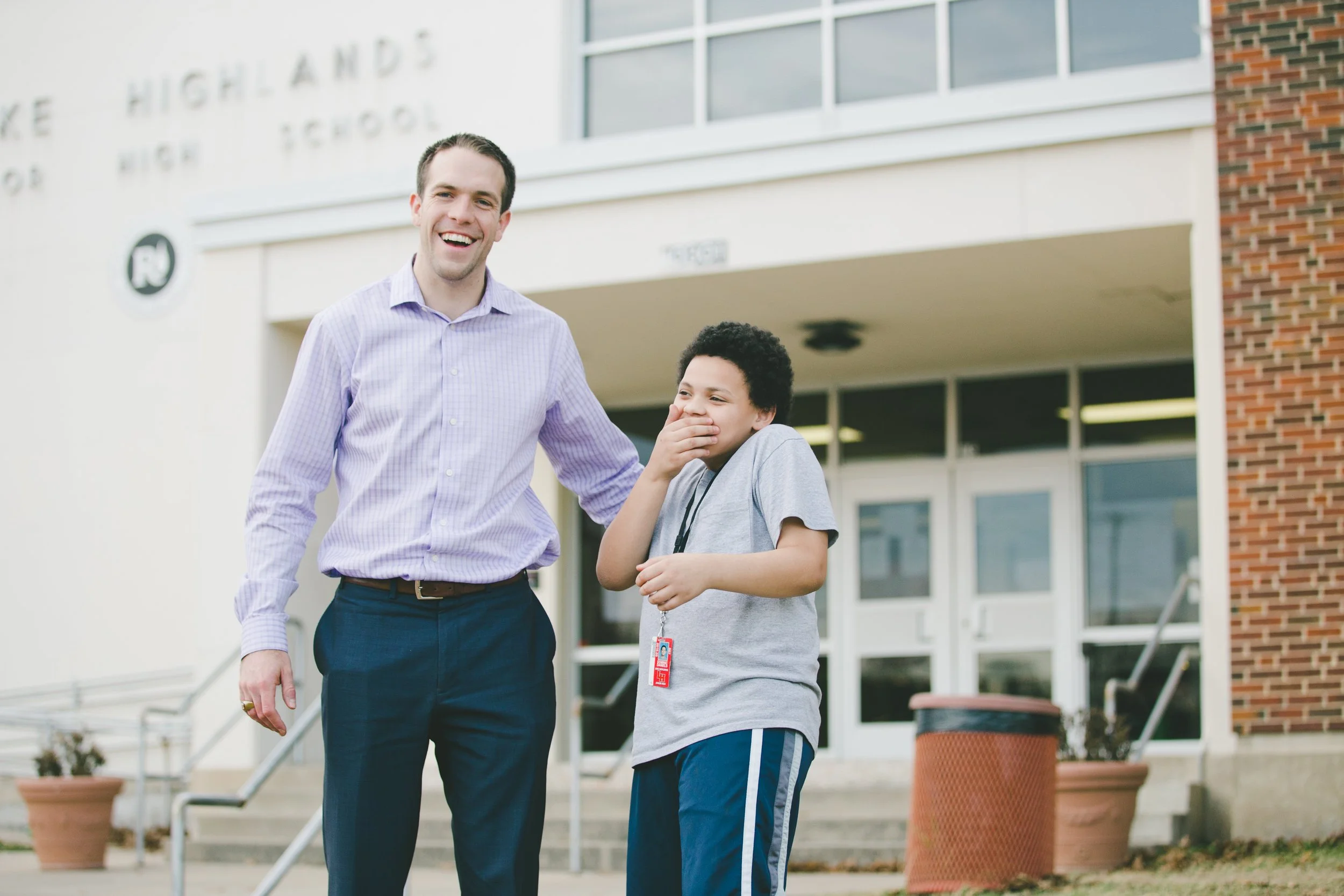
The car smelled like fast-food fries and wet grass from the soccer field when Nolan climbed into the passenger seat. He pulled the door shut, dropped his backpack by his feet, and immediately opened his phone. I had picked Nolan up after school plenty of times, but that afternoon I had come prepared in a way I thought would make the drive meaningful.
I had questions in my head, a few things I wanted to talk about, and a direction I hoped we would go. Nolan had been missing assignments, getting into little conflicts at school, and pulling away during our time together. I wanted to help him think through all of it, and I wanted to use the drive well.
I asked about school, and Nolan said, “Fine.” I asked about the test he had mentioned the week before, and he shrugged. I asked about a teacher who had been frustrating him, but he kept scrolling and said, “It’s whatever.”
I kept trying to pull more out of the conversation. I offered encouragement, told a story from my own life, and mentioned some ideas about how he could handle the next week differently. The more I talked, the more I could feel the conversation slipping away.
Nolan nodded just enough to be polite, but he never looked up from his phone. By the time I dropped him off, I was frustrated. I had given him my time, prepared for the afternoon, and tried to say things that could help, yet the whole ride felt like I had been talking into the windshield.
On the drive home, I replayed every part of the afternoon. At first, I thought Nolan was disengaged. Then I wondered whether I had said something wrong. But underneath all of that was a harder question: Why did I feel entitled to Nolan’s attention simply because I had shown up with something to say?
The answer was uncomfortable. I had come into the car ready to lead before I had taken time to see him. I was treating the drive like a chance to deliver something instead of a chance to know someone.
A Kid’s Attention Is Not Owed to Us
Mentors can bring good intentions, preparation, energy, and genuine care, yet still fail to earn a young person’s attention. I have had to learn that the hard way.
It is easy to assume that because I made time for a mentee, they should be ready to engage with me. I can think that my effort should naturally be met with their openness. But for many kids, attention is not something they give away casually. It is something they protect.
A young person may have learned that adults ask questions only to collect information, correct behavior, or check whether a child is doing what they should. After enough disappointment, withholding attention can feel safer than offering it.
Nolan did not owe me a deep conversation because I picked him up after school. His guardedness may have looked like apathy, but it could have been protection.
Influence is not something a mentor gets because of an assigned role, a scheduled meeting, or a prepared lesson. It is built slowly through trust. If I want a young person to listen when I speak, I need to show them first that I am willing to listen when they speak.
The question shifted from, “Why will he not engage with me?” to, “Have I given him enough reason to believe that his world matters to me?”
The Next Ride Started With His Screen
The next time Nolan got in the car, he did the same thing. His hood was up, his backpack was on the floor, and his phone was already in his hand before I backed out of the parking lot.
Everything in me wanted to say, “Put the phone away. Let’s talk.” That would have made the car ride look more productive, at least to me. But I remembered how the last ride had gone, and I remembered that I had spent the entire drive trying to pull Nolan into my agenda.
So I looked over and asked, “What are you watching?”
Nolan glanced at me, surprised. “Nothing.”
“It looks like something,” I said. “You have been laughing at it since you got in.”
He hesitated, then turned the screen toward me. It was a video of a basketball player breaking down a move from the night before. Nolan started explaining why the player was so hard to guard and why his favorite team kept making the same mistake late in games.
At first, I did not understand most of it. But I kept asking questions. I asked who he thought was underrated, what position he would play if he could pick, and why he liked that team so much.
Somewhere between the school parking lot and the burger place, Nolan put his phone down. He told me he had tried out for basketball the year before but quit after a couple of practices because he felt behind everyone else. He had never told me that, because he did not want me to know he cared that much.
The conversation did not become different because I finally found the perfect question. It changed because I stopped asking Nolan to enter my world and chose to enter his.
Listening Is More Than Waiting Your Turn
There is a difference between listening and waiting for your chance to speak. I can make eye contact, nod my head, and still be mentally preparing the next lesson, redirect, or piece of advice.
A young person can feel when I am doing that. They know when I am hearing words but not receiving them. Real attention requires more than being physically present.
It means putting down the phone, silencing the internal list, and letting the conversation go somewhere I did not plan. It means caring about the thing a mentee brings up even when it feels unimportant compared to the thing I thought we needed to discuss.
Surface-level topics are often the bridge toward deeper trust. Nolan’s basketball videos were not a distraction from mentoring. They were part of the road into his story.
When I stay curious, I communicate that a young person is worth learning. Many kids are used to adults bringing expectations. They may not be used to someone asking, “Why does that matter to you?” and genuinely waiting for the answer.
The Credibility Built Between Meetings
A mentor earns the right to be heard not only during the hour spent with a mentee. Credibility is built in all the moments around it.
Kids are paying attention to whether we do what we say we will do. They notice if we cancel without explanation, forget what they told us, or answer our phones while they are talking.
They also notice whether our life matches the values we try to teach. If I tell Nolan that integrity matters but cut corners when it costs me something, he will see it. If I say relationships matter but treat him like another item on my schedule, my words will become hollow.
Mentors do not have to be perfect, but honesty and apology matter. Letting a mentee see how we handle stress, conflict, and repair matters.
One afternoon, I got stuck in traffic and arrived late to pick Nolan up. I could have acted like it was no big deal. Instead, I apologized, told him I should have communicated earlier, and let him know I understood that his time mattered too.
Nolan did not say much, but a few weeks later he texted me before a meeting to say he was running late. It was a small thing, but I think he had learned that communication was not only something adults demanded from kids. It was something we practiced with each other.
The Slow Signs That Trust Is Growing
Earning attention is rarely dramatic. Most of the time, it happens through small changes that would be easy to miss if we are looking only for major breakthroughs.
A mentee answers with a few more words, shows you something that matters to them, asks a question back, or admits they are embarrassed, angry, or unsure. Those moments are evidence that a child is beginning to believe the relationship can hold something real.
Nolan did not suddenly become talkative. There were still drives where he was tired or not ready to talk. I had to learn not to treat every quiet ride as a failure.
Sometimes the most faithful thing I could do was let the silence be quiet without trying to fill it. I could simply say, “You do not have to talk if you are not ready, but I am glad you are here.”
Trust grows when young people discover that we are not only interested in them when they are engaging, grateful, or easy to mentor. They need to know that we are steady enough to stay close when they are distracted, discouraged, embarrassed, or unsure.
Practices That Help a Mentor Be Worth Hearing
Prepare your heart before you prepare your words
Before you meet with your mentee, take a moment to release the plan you have built in your head. Ask God to help you notice the person in front of you rather than forcing the moment toward an outcome.
Put your phone away before asking them to put theirs away
A mentor cannot ask for focused attention while offering divided attention. Create a small space where your mentee can feel that they are not competing with notifications, work, or your mental list.
Follow the thread they give you
Pay attention to what makes them light up, even briefly. If they mention a game, a song, a sport, a friend, or a frustration, stay with it long enough to learn why it matters.
Remember what they tell you
Write down a few details after your time together. Remembering the test, the birthday, the tryout, or the family situation tells a young person that their life did not disappear from your mind when the meeting ended.
Let your life reinforce your words
Be honest when you mess up. Keep your commitments. Communicate when plans change. The example you live between meetings often speaks louder than the advice you give during them.
Measure faithfulness before engagement
Instead of asking whether the mentee gave you the response you hoped for, ask whether you were present, patient, and attentive. That keeps your joy from depending on immediate results.
What I Learned From a Quiet Car Ride
I used to think my job was to make every mentoring conversation meaningful. I wanted the right question, the right insight, and the right response. I believed that if I came prepared enough, a young person would naturally open up.
But mentoring does not work that way. Young people do not need adults who are constantly trying to say something important. They need adults who make them feel important.
Nolan did not need me to become an expert in basketball. He needed me to care enough to ask why it mattered and to stop assuming that his phone meant he did not care about the relationship.
That is how mentors earn the right to be heard. We see before we speak. We listen before we lead. We become consistent enough that our words feel like care rather than pressure.
Then, when the harder conversations come, a young person is more likely to believe that we are for them. A mentee’s attention is not something we demand. It is something we receive slowly, gratefully, and responsibly as trust grows.
Discussion Questions
Where are you most tempted to bring your own agenda into time with your mentee before taking time to understand theirs?
What is one interest, concern, or detail from your mentee’s world that you could follow up on this week?
How can your life between meetings make your words more believable when you are together?
