
Why a Mentee’s World Is Your Mission Field
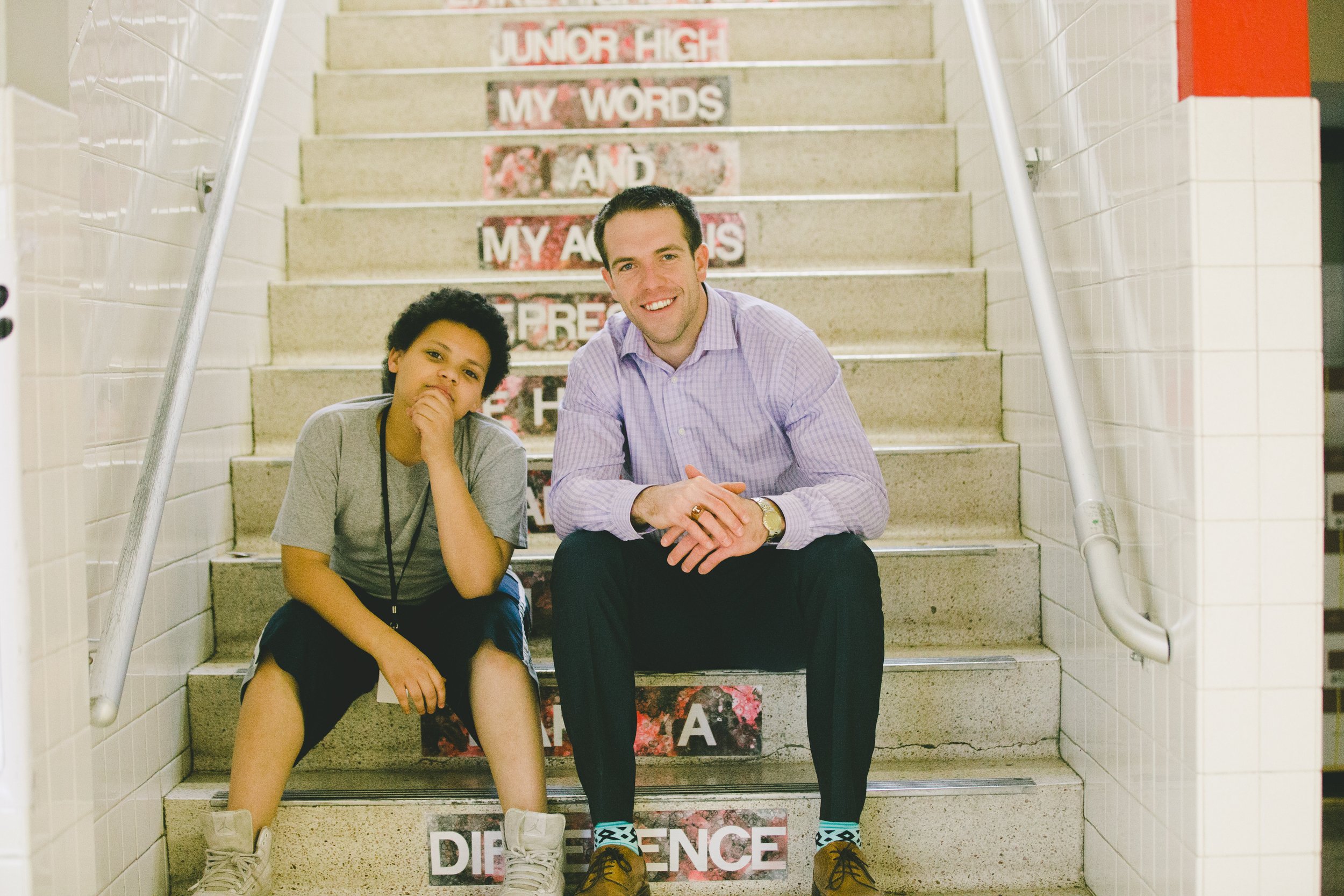
The first few times I volunteered, I stuffed envelopes, organized papers, and helped keep the program moving. It all needed to be done, but I knew I had come to know kids, not simply serve around them.
After a few weeks, I asked to be placed where I could interact with students. Somebody pointed me toward a room down the hall where teenage boys gathered after school. Music came through a cracked speaker, chairs scraped the floor, and somebody was already arguing over a game.
That was where I first noticed Terrence, a young man who had the kind of presence that could change a room without ever raising his voice. On some days, he was the funniest kid there. He could make everybody laugh with one look or one perfectly timed comment. On other days, he seemed to walk in carrying a storm. He would push back, test adults, and turn a small frustration into something bigger than it needed to be.
People had already formed opinions about Terrence. Adults called him disruptive, disrespectful, and a handful, and I understood why those words came out quickly. But I also noticed that Terrence watched who got embarrassed, who got picked on, and whether adults seemed irritated or ready to give up. He was trying to figure out whether the room was safe.
For a while, I stayed in the places that felt controlled. I met Terrence during program time, asked him questions, and tried to build rapport in the middle of a crowded room. But I began to realize that I was trying to mentor Terrence without knowing the places that had shaped him.
So I started asking questions. I asked about his classes, which teachers he liked, which ones he avoided, what lunch was like, who he rode home with, and where he spent most afternoons. Eventually, I asked if I could come sit in the back of one of his classes.
Terrence looked at me like I had just suggested something completely unnecessary. “Why would you want to do that?” he asked. I told him the truth: “Because I want to understand what your day is actually like.” He shrugged, but the next week he gave me the class period and room number, so I showed up with a visitor badge and a chair in the back.
What I Could Not See in a Weekly Meeting
The classroom was more chaotic than I expected. The teacher was trying to hold the attention of more than thirty students while phones buzzed, side conversations started and stopped, and several kids were clearly carrying something heavier than the assignment in front of them.
Terrence was not perfect that day. He made a few comments. He got distracted. He looked over his shoulder more than once. But I also saw things I would never have seen during our weekly meeting.
I saw Terrence hand a pencil to a student who did not have one, bite his tongue when another boy tried to start an argument, and look toward the door whenever the hallway got loud. I also saw how often the teacher called his name when other students were doing the same thing.
By the end of the period, I had more compassion for Terrence than I had when I walked in, because nothing about that classroom excused bad choices, but it gave those choices context. I was no longer looking at a student who had simply decided to be difficult. I was beginning to see a young man trying to navigate pressure, noise, relationships, and expectations that were part of his every day.
That is the difference between mentoring from a distance and mentoring from inside someone’s world. Distance makes it easy to assume. Proximity forces us to pay attention.
When we only see a mentee for one hour a week, we can develop a very thin version of their story. We may know what they tell us, but not what it costs them to get through a school day. We may see their behavior, but not the pace, the pressures, the people, and the places that shape it.
A mentee’s school, neighborhood, family rhythms, friendships, church, job, bus ride, and home environment are not side details. They are the soil their life is growing in. If we want to understand the fruit, we need to care about the soil.
Your Comfort Zone Is Not the Assignment
One of the biggest mistakes I have made in mentoring is expecting a young person to come into my world before I have taken the time to enter theirs. My world is more comfortable because I know the rules. Their world may be loud, unfamiliar, complicated, or intimidating, and it may challenge my assumptions about school, family, culture, safety, and what a normal afternoon looks like.
But mentoring does not happen best when the young person is always adapting to us. It grows when we are willing to take a few steps into the world they already know.
That does not mean acting like we understand a neighborhood after one drive through it. It does not mean showing up uninvited or trying to become a hero in somebody else’s environment. It means moving with humility, asking permission, listening carefully, and refusing to treat the places that formed a child as irrelevant.
I have had to face my own fear in this work. There are places where I have felt out of place. There are conversations with teachers, caregivers, and school leaders that have made me nervous. There are environments where I have wondered whether I belonged or whether I had anything useful to offer.
But fear has a way of making us stay at a safe distance from the very people we are called to love. God has not asked mentors to feel ready before we move toward kids. He has asked us to be faithful.
Sometimes faithfulness looks like walking into a school building, sitting in the bleachers at a game, showing up for a performance, taking a ride through a neighborhood, or asking a caregiver, “What is a normal week like for him?” The goal is not to gather information. The goal is to communicate value.
When we enter a mentee’s world with respect, we tell them, “Your life matters enough for me to learn it.”
Build Relationship Before You Bring Advice
When I first started spending time with Terrence, I wanted to address everything I saw. I wanted to talk about school, choices, respect, anger, and the ways he could handle conflict differently. I had advice ready before I had enough relational credibility to offer it.
Thankfully, I learned to slow down. Terrence did not need another adult who had a list of things he should fix. He needed to know whether I would still be around after a hard day. He needed to know whether I was interested in him outside of the moments when he was causing trouble. He needed relational stock before my words would carry much weight.
That stock gets built through ordinary deposits. You show up when you say you will. You ask about the test they mentioned last week. You sit through the game even when they barely play. You get a drink after school. You laugh in the car. You send the text. You follow through.
Those things may not feel like mentoring in the moment, but they are often the foundation of it. One afternoon, Terrence and I stopped for a drink after school and talked about a teacher he thought was unfair and a basketball game he wanted to watch. Somewhere in that ordinary conversation, he started telling me about a friend who had been getting him into trouble.
I do not think that happened because I asked one brilliant question. It happened because enough small moments had convinced Terrence that I was not only interested in correcting him.
Presence is what gives advice credibility. Without presence, even wise words can sound like another adult talking at a kid instead of walking with them.
Learn the Names of the People Around Them
Stepping into a mentee’s world also means recognizing that you are not the only person influencing them. Terrence had teachers, siblings, classmates, neighbors, coaches, and caregivers who saw parts of him I did not see.
I learned that I could become a better mentor by listening to the people who were already part of his daily life. That required humility. I had to resist the instinct to believe I was coming in with the answer.
A teacher might understand the pressure a student feels in class. A caregiver might know the part of the week when things are hardest at home. A coach might see leadership that never comes out in a small group.
We have to be wise about boundaries and confidentiality, but when appropriate, healthy relationships with the people around a mentee help us see the whole child. It tells a young person that we are not trying to pull them out of their world, but become one faithful adult within a wider web of care.
Let Them Show You Around
Stepping into a mentee’s world can begin with a small choice. Go to the game they keep talking about, ask to see the art project they are proud of, or let them explain the hobby that matters to them.
When a young person gets to teach you something, the relationship changes. You become a learner, and that posture communicates respect.
I have seen kids light up when an adult asks a real question about something they love. They may not have much control over school, family, or circumstances, but they know their world. Letting them show you around communicates that what matters to them matters to you.
Pray for the Places That Form Them
Pray for the classroom where they feel behind, the caregiver who is exhausted, the friendships pulling them in the wrong direction, and the places where fear or loneliness show up.
Prayer changes the way we see a child. It reminds us that we are not responsible for controlling outcomes and that God is already present in the places we are just beginning to understand.
When I pray for a young person’s world, I become slower to judge and more ready to notice. I become less focused on what I can fix and more attentive to where God may already be at work.
The Room That Became a Mission Field
I started out stuffing envelopes because that was the task in front of me. I had no idea that one request to spend time with students would lead me into classrooms, parking lots, conversations with teachers, and ordinary moments that would reshape how I understood mentoring.
Terrence did not need me to rescue him from his world. He needed me to care enough to enter it.
That is the invitation for every mentor. A mentee’s world is not a distraction from the work. It is the place where the work becomes real.
When we are willing to leave the comfort of our own routines and step respectfully into the places that shape a young person, we begin to see more clearly. We see pain we would have missed, strengths we would have overlooked, and opportunities to love that would never appear in a scheduled meeting.
The room, the classroom, the neighborhood, the bus stop, the sideline, and the kitchen table can all become places where God uses faithful presence to build trust. That is why a mentee’s world is your mission field, not because you are going in to save it, but because you are going in to love someone who lives there.
Discussion Questions
Where might you be trying to mentor a young person from a safe distance instead of taking time to understand their everyday world?
What is one respectful, appropriate way you can step into your mentee’s environment this month?
What fear or discomfort might be keeping you from moving closer, and what would faithfulness look like anyway?
