
Why “Watch Me” is More Important than You Think
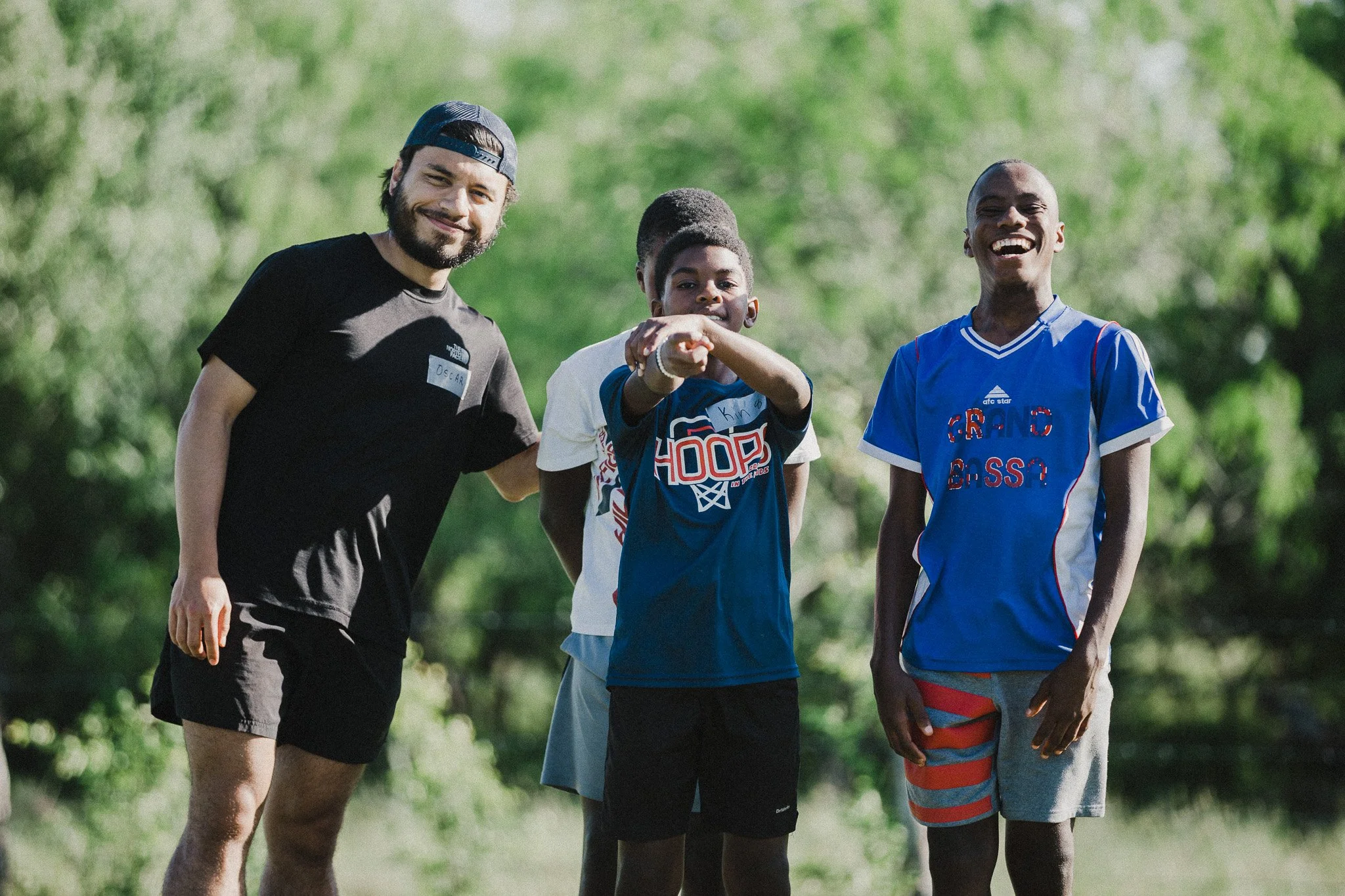
“Mr. Steven, Don’t Leave Yet!”
The field had mostly cleared out, and I was already thinking about the next thing on my schedule.
My bag was slung over my shoulder. A few parents were gathering their kids near the parking lot. Somebody was dragging a cooler toward the church van, and the last group of boys were still kicking a ball around even though everybody had been told it was time to go.
I had already turned toward my car when I heard my name behind me.
“Steven!”
I kept walking for half a step because I assumed it was somebody calling out casually. Then I heard it again, louder this time.
“Steven! Steven! Steven!”
When I turned around, I saw Marcus standing near the edge of the field. Marcus was not running toward me. He was not waving his arms or trying to get everybody’s attention. He was just standing there, completely locked in on me, waiting to see whether I would stop.
Something about the way Marcus was looking at me made me realize this was not a casual goodbye.
I turned my whole body toward Marcus and lifted my hand. “What’s up, Marcus?”
The change in him was immediate. His shoulders relaxed. The urgency in his face softened. Marcus smiled for just a second and said, “Bye.”
That was it.
No long conversation. No big question. No emergency. Marcus just needed to know that before I left, I had seen him.
At first glance, it would have been easy to think Marcus was yelling across the field because he wanted attention. And technically, he did. But that word can make us miss the heart of what a child is asking for.
Marcus was not trying to interrupt me. Marcus was not trying to make my day harder. Marcus was asking a much deeper question in the only way he knew how.
Do I matter enough for you to stop?
Do I matter enough for you to turn around?
Do I matter enough for you to notice me before you leave?
That small moment has stayed with me because it reminds me that children are always communicating. They may not use the words we wish they would use. They may yell, interrupt, withdraw, act out, or linger nearby after everyone else has gone home. But behind so much of what we call attention-seeking is a child trying to figure out whether they are worth seeing.
The Question Beneath the Noise
I think mentors can misread moments like that because we are usually moving too fast.
We have work to finish. We have a meeting to get to. We have our own families, responsibilities, errands, and mental lists waiting for us. We see the volume, the interruption, or the behavior, and we naturally want to address the thing right in front of us.
If I had responded to Marcus by saying, “Don’t yell like that,” I would not have been entirely wrong. There are appropriate ways to get an adult’s attention. Kids need to learn that. But I would have missed what was happening underneath the yell.
Marcus did not need a lecture first. Marcus needed acknowledgment.
Kids, especially kids who have experienced instability, neglect, rejection, or inconsistency, are constantly asking questions about their own worth. They may not know how to say, “I am afraid you are going to forget about me.” They may not be able to say, “I do not know whether adults notice me unless I make a scene.” But those questions still come out.
Some kids ask loudly.
They interrupt. They blurt things out. They call your name three times from across a field. They do something just disruptive enough to make sure everyone looks their way.
Other kids ask quietly.
They stay close without starting a conversation. They sit near you. They wait until everybody else leaves. They say, “I’m good,” while their eyes tell you that they are hoping you will ask again.
Both kids may be asking the same question.
Do you see me?
One of the most important things a mentor can learn is to hear the question beneath the noise.
That does not mean every interruption is a deep emotional moment. Sometimes kids are simply being kids. But when we build the habit of slowing down, we become more likely to notice when a moment carries more weight than it appears to.
Marcus Was Asking for More Than a Goodbye
I have thought about Marcus often because what he wanted was so simple.
He did not ask me to solve a problem. He did not need advice. He did not need a pep talk, a lesson, or a big spiritual conversation. Marcus needed me to turn around and let him know that he had not disappeared into the crowd.
That may sound small, but for a child who has spent a lot of life feeling overlooked, small moments can carry enormous weight.
I remember people in my own life who gave me their attention in ways that seemed ordinary at the time. A coach who asked about something I mentioned the week before. A mentor who came to watch me even when I was not the star of the game. An adult who sat in the car a few extra minutes because I was not ready to go inside yet.
None of those moments required a huge speech. None of them were dramatic.
But each one said something that landed deep.
You matter enough for me to slow down.
You are worth my time.
I notice what is happening in your life.
Kids do not always remember our lesson plans. They do not always remember the words we use in a talk. But they remember who made them feel seen.
That is why attention is one of the most powerful forms of love we can offer. Attention is not simply watching a child. It is communicating worth through presence.
When I turn my body toward a kid, put my phone down, look them in the eye, and listen without rushing, I am saying something far deeper than, “I hear your words.” I am saying, “You are worth my focus.”
For some kids, that message is so unfamiliar that they will test it. They may get louder before they get quieter. They may interrupt before they learn to wait. They may act like they do not care while watching carefully to see whether you really mean what you say.
That is why consistency matters.
One moment of attention is meaningful. Repeated moments of attention begin to form a pattern. And patterns shape belief.
The Difference Between Being Seen and Being Managed
There is a difference between managing a child’s behavior and seeing a child’s heart.
Management asks, “How do I get this kid to stop?”
Seeing asks, “What is this kid trying to secure right now?”
Management is sometimes necessary. We need structure. We need boundaries. We need to protect other kids and help young people learn how to function in a group.
But when management becomes our whole approach, a child can begin to feel like a problem we are trying to solve.
That is especially dangerous for kids who already believe they are too much.
A child who constantly interrupts may not need less attention. They may need better, healthier, more consistent attention. A child who acts out may not need us to ignore the behavior. They may need us to see that their behavior is trying to accomplish something.
Maybe they are trying to avoid being invisible.
Maybe they are trying to make sure someone notices their pain.
Maybe they are trying to control a room because their life outside the room feels unpredictable.
Maybe they are asking, without words, “Will you still care about me when I make this difficult?”
The goal is not to reward every disruptive action. The goal is to respond to the person before we respond to the behavior.
That might sound like, “Marcus, I see you. Give me one second, and then I am coming to talk with you.” It might sound like, “I know you want my attention. You do not have to shout across the room for me to notice you.” It might mean pulling a kid aside after the group and saying, “You seemed like you needed something today. Tell me what was going on.”
That kind of response holds both dignity and direction.
Full-Face Attention
One of the simplest practices I have learned is what I think of as full-face attention.
Full-face attention means I turn my body toward the child. I make eye contact. I stop doing three things at once. I put down the phone, stop scanning the room, and communicate through my posture that I am actually present.
When Marcus called my name, I could have yelled “Bye!” over my shoulder and kept walking. Instead, I turned around. That small decision mattered because Marcus did not just hear my response. Marcus saw that I had stopped.
Kids are incredibly aware of whether we are half-listening or fully present.
They know when we are looking at them but thinking about something else. They know when we ask, “How are you?” because it is a habit rather than because we genuinely want the answer. They also know when we are willing to pause and give them our full attention.
This does not mean every conversation has to be long. Sometimes the most meaningful thing you can do is give a child thirty seconds of undivided attention instead of ten distracted minutes.
A mentor’s attention does not have to be intense to be meaningful. It simply needs to be real.
Naming What You Notice
Kids need more than general encouragement. They need adults who notice specific things about them.
Instead of only saying, “Good job,” we can say, “I saw the way you waited for that younger kid to finish talking.” Instead of saying, “You are doing great,” we can say, “You kept trying when that was hard, and that showed perseverance.”
Specific affirmation helps a child see themselves more clearly.
It also tells them that you are paying attention to more than their problems.
Many kids from hard places have grown used to adults noticing them mainly when they mess up. They hear their name when they are in trouble, when they are too loud, when they are late, when they have failed to do something, or when they need to be corrected.
Mentors can help interrupt that pattern by using a child’s name when we see something good and true.
“Marcus, I saw you help pick up without anybody asking.”
“Marcus, you have a way of making people laugh when the room gets awkward.”
“Marcus, I am proud of the way you handled that.”
That is not flattery. It is truthful attention. It is helping a child recognize gifts, character, and growth that may be difficult for them to see on their own.
The Ordinary Rhythm of Being There
It is easy to think the most important mentoring moments will be big ones. A breakthrough conversation. A major decision. A crisis where a kid finally opens up.
Those moments matter. But most trust is built through ordinary repetition.
It is built when you text back.
It is built when you remember something important.
It is built when you show up when you said you would.
It is built when you make eye contact across a crowded room and let a kid know you see them.
Marcus’s goodbye mattered because it was part of a larger pattern. If I had never paid attention to Marcus before, turning around one time would not have carried the same weight. But when attention becomes part of the rhythm of a relationship, kids begin to expect it.
And that expectation can begin to reshape identity.
A child who once believed, “Nobody notices me,” begins to think, “Maybe I matter to someone.”
A child who believed, “I have to be loud to be seen,” begins to learn healthier ways to ask for connection.
A child who has spent years feeling like an afterthought begins to understand that they have a place in someone else’s life.
Carrying This Into Your Week
The next time a child seeks your attention, try not to begin with the behavior. Begin with the need.
Slow down long enough to ask what might be happening underneath. Is this child trying to secure connection? Are they afraid of being overlooked? Is there a quieter question hiding behind the loud behavior?
Then respond with both presence and guidance.
Give full-face attention. Use their name. Name something specific you see. Set a boundary if you need to. Follow up later if the moment feels bigger than what can be handled in the moment.
Mentoring is not about being available every second. None of us can do that. It is about becoming the kind of adult who helps a child believe that reaching out is worthwhile.
That is what Marcus needed on the field.
He did not need me to give a perfect response. He needed to know that when he called my name, someone would turn around.
Discussion Questions
When a child seeks attention, what do you tend to assume first, and how might that assumption shape the way you respond?
What would full-face attention look like in one of your current mentoring relationships this week?
What is one specific thing you can notice and name in your mentee that might help them feel seen?
